Discover Rafting Across Pakistan
Pakistan is home to some of the highest mountain ranges on Earth—the Karakoram, Himalayas, and Hindu Kush—giving rise to powerful glacier-fed and snowmelt rivers that offer exceptional white-water rafting and kayaking opportunities. From gentle, scenic valley floats ideal for families to roaring Class IV–V gorges built for seasoned expedition paddlers, Pakistan’s waterways cater to every skill level.
Northern Pakistan forms the heart of the country’s rafting scene. Accessible valleys such as Kaghan (Kunhar River), Swat, and Neelum offer popular guided day trips through pine-forested gorges. Further north in Gilgit-Baltistan and Chitral, mighty rivers like the Indus, Hunza, Gilgit, Shyok, Shigar, and Chitral deliver dramatic high-altitude white-water runs framed by towering granite peaks.
In the foothills and plains of Punjab and Khyber Pakhtunkhwa, calmer river stretches and canal systems provide milder recreational rafting, tubing, and training environments during warmer months.
Rafting experiences in Pakistan range from 30-minute commercial tourist runs to multi-day self-supported river expeditions. Availability, rapid grades, and safety depend heavily on seasonal snowmelt, monsoon rainfall, river volume, and licensed guide operations.
Adventure Touristik helps travellers discover white-water routes, connect with certified river guides, and plan safe rafting excursions across Pakistan.
What Is White-Water Rafting?
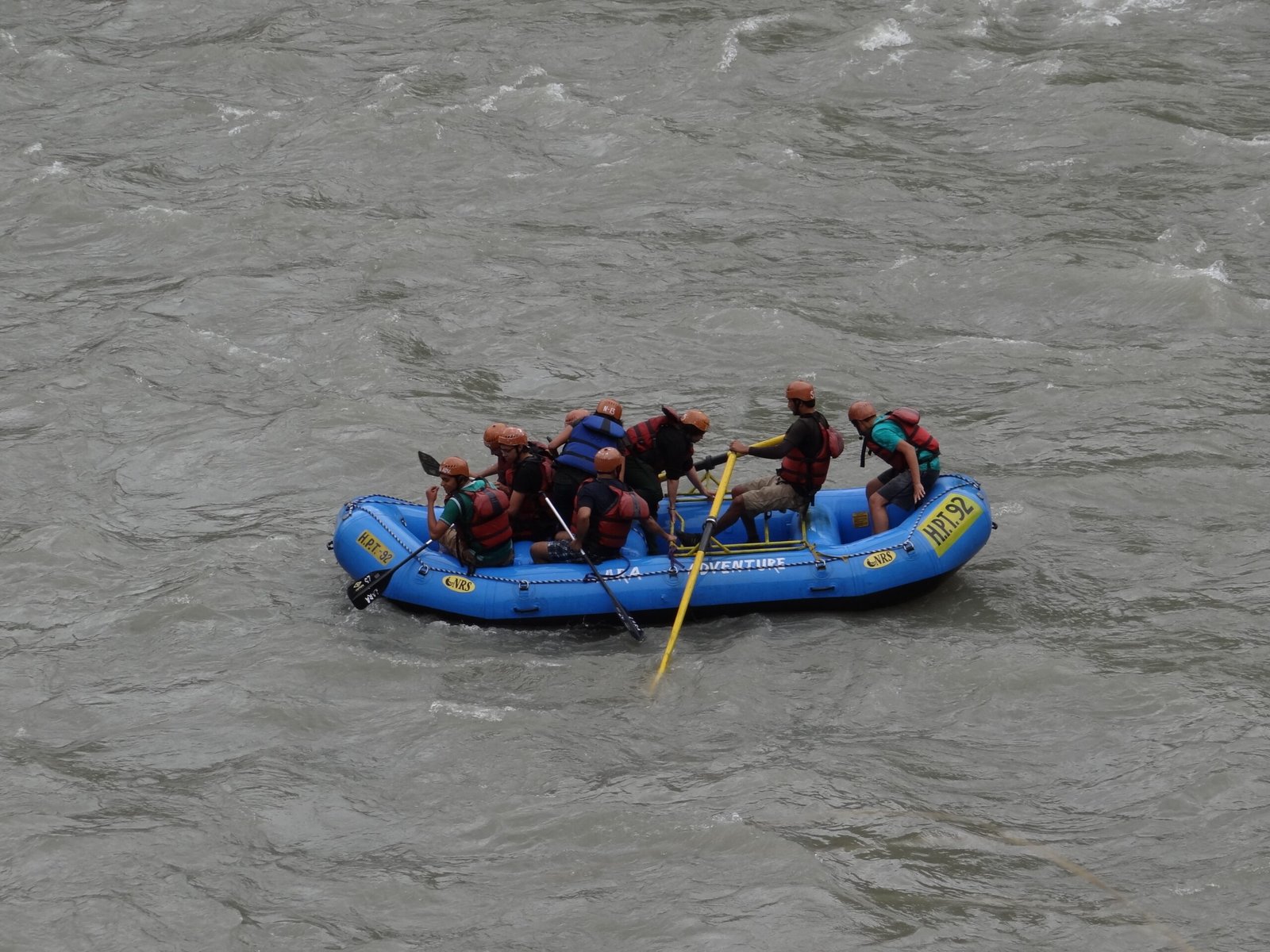
White-water rafting is an outdoor recreational water sport in which participants navigate rivers and rapids using an inflatable raft, typically guided by an experienced river captain and propelled with double-bladed or single-bladed paddles.
River rapids are classified internationally from Class I (moving water with small ripples) to Class VI (extreme, unnavigable hazards). In Pakistan, seasonal glacial melt dramatically alters river classifications—a river that flows gently as Class II in spring or autumn can surge into intense Class IV or V white water during peak summer heat.
Because mountain rivers carry freezing glacial water and shifting currents, proper safety gear—including personal flotation devices (life jackets), helmets, wetsuits or dry tops, and throw bags—is essential.
Rafting in Northern Pakistan
Northern Pakistan offers the most established commercial rafting operations as well as remote expedition-grade rivers. Snowmelt from May through September fuels high water volumes, while autumn brings clearer turquoise waters and steadier flows.
1. Kunhar River – Naran & Kaghan Valley (Khyber Pakhtunkhwa)
Flowing through the heart of Kaghan Valley from Lulusar Lake down toward Balakot, the Kunhar River is Pakistan’s most popular and accessible white-water rafting destination.
Commercial rafting stretches around Naran, Batakundi, and Paras typically feature Class II to III rapids, balancing exciting splashes with calm scenic intervals surrounded by pine forests and mountain peaks. Licensed local operators run regular half-day and short recreational trips from May to September, making it ideal for beginners and families.
2. Swat River – Bahrain, Madyan & Fizagat (Khyber Pakhtunkhwa)
The Swat River provides a dynamic mix of cultural scenery and accessible white water as it winds past riverside villages, orchards, and green hills.
Lower sections near Fizagat and Mingora offer gentle Class I–II floats suited to first-time rafters, while upper stretches between Kalam, Bahrain, and Madyan step up to Class III–IV rapids during peak summer flow. Many trips pair daytime rafting with riverside camping.
3. Indus River – Skardu, Rondu Gorge & Jaglot (Gilgit-Baltistan)
The mighty Indus River offers Pakistan’s premier big-water expedition rafting. Flowing through deep arid canyons between Skardu, Rondu Gorge, and Jaglot, the Indus features massive standing waves, strong currents, and Class III to V rapids.
Due to cold glacial water, remote canyon walls, and technical rapids, rafting the Upper Indus is best suited to intermediate and experienced paddlers accompanied by professional expedition teams and safety kayakers.
4. Hunza & Gilgit Rivers (Gilgit-Baltistan)
The Hunza River—fed by massive Karakoram glaciers—carves through dramatic gorges beneath peaks like Rakaposhi and Ultar Sar, offering cold, high-adrenaline Class III to V runs past iconic landmarks such as the Hussaini Suspension Bridge.
The Gilgit River, particularly between Gupis, Punial, and Gilgit town, provides slightly more moderate Class II to III stretches with expansive valley views, making it well suited for guided day runs or multi-day river journeys linking into the Indus.
5. Shyok, Shigar & Braldu Rivers – Baltistan (Gilgit-Baltistan)
Baltistan’s tributary rivers offer remote, scenic paddling routes surrounded by high Karakoram peaks:
-
Shyok River (Khaplu & Ghanche): Flowing past Khaplu and Saling, the Shyok features wide braided channels alongside faster gorge sections, offering thrilling multi-day rafting and kayaking options from late spring to autumn.
-
Shigar & Braldu Rivers: Fed by the Baltoro and Biafo glaciers, the Braldu River offers technical high-gradient white water, while the lower Shigar River near Skardu provides milder scenic stretches past the Sarfaranga Cold Desert.
6. Chitral & Panjkora Rivers (Khyber Pakhtunkhwa)
In the Hindu Kush region, the Chitral (Kunar) River and its tributaries—such as the Lutkoh River—offer fast, cold glacial white water (Class III–IV) framed by rugged mountain terrain. Further south in Dir, the Panjkora River provides seasonal rapids for experienced river runners.
7. Neelum River – Neelum Valley (Azad Kashmir)
Winding along the forested slopes of Neelum Valley from Kel and Sharda down toward Keran and Athmuqam, the Neelum River features crisp mountain waters with Class II to III rapids. Seasonal guided trips operate primarily during summer and early autumn, depending on river levels and local permissions.
Rafting in Other Regions of Pakistan
While high-adrenaline white water is concentrated in the north, milder river floats and recreational water adventures are available in lower-elevation regions.
8. Lower Indus, Soan & River Headworks (Punjab & KPK)
Where the Indus exits the mountains near Attock and Kalabagh, the river widens into gentler currents suitable for scenic multi-day raft floats, birdwatching, and fishing excursions. Similarly, regulated sections near river headworks in Punjab (such as Chenab and Ravi stretches) and seasonal streams in the Margalla foothills occasionally host flat-water rafting, kayaking, and paddling events.
Types of Rafting Experiences in Pakistan
Depending on your experience level and itinerary, rafting in Pakistan falls into several formats:
-
Family & Beginner Scenic Floats (Class I–II): Short, safe commercial runs on the Kunhar River (Naran) and lower Swat River, requiring no prior paddling experience.
-
Intermediate White-Water Day Trips (Class III): Full-day guided runs on the Gilgit River, upper Swat River, or Neelum River featuring technical waves and thrilling rapids.
-
Multi-Day Expedition Rafting (Class III–V): Self-contained river expeditions on the Indus, Shyok, or Hunza rivers involving riverside camp setups, safety kayaks, and full logistical support.
-
River Kayaking & Packrafting: Increasingly popular among international adventure travellers exploring side streams in Skardu, Khaplu, Ghizer, and Chitral.
The optimal season varies by river flow and temperature:
-
May to September: Peak season for commercial rafting in Kaghan (Kunhar), Swat, and Neelum valleys when weather is warm and operators are active.
-
Late Spring (May–June) & Autumn (September–October): Best for big glacial rivers in Gilgit-Baltistan (Indus, Hunza, Shyok, Gilgit), as water levels are manageable and clearer than during peak July–August glacial melt.
Affiliated with & Licence