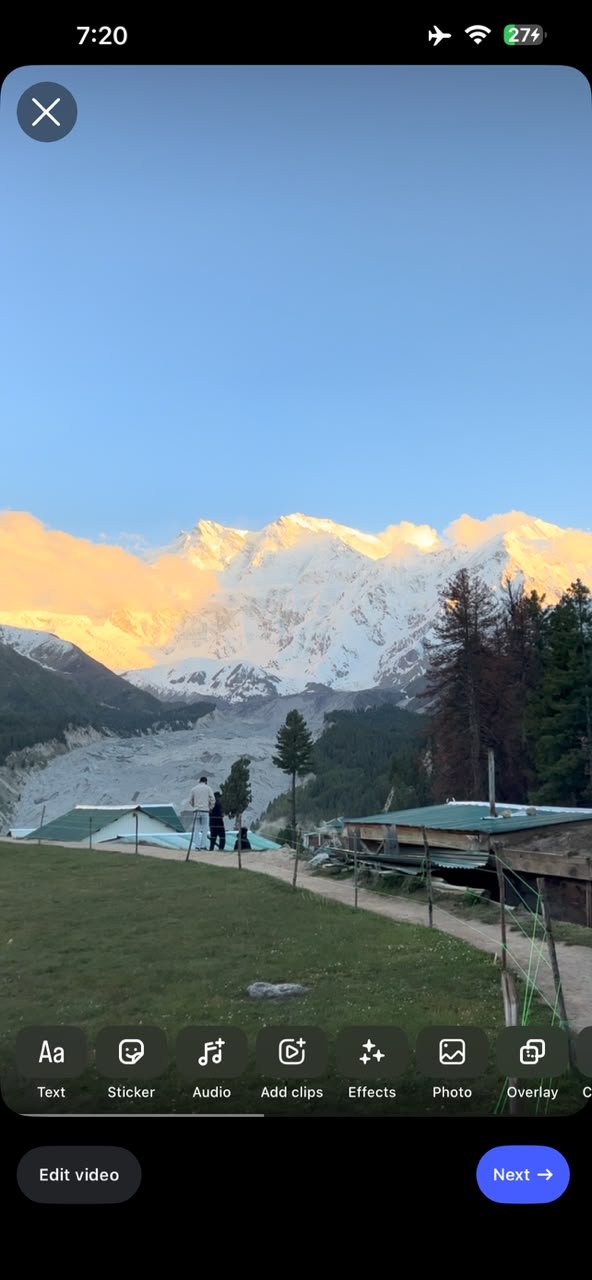
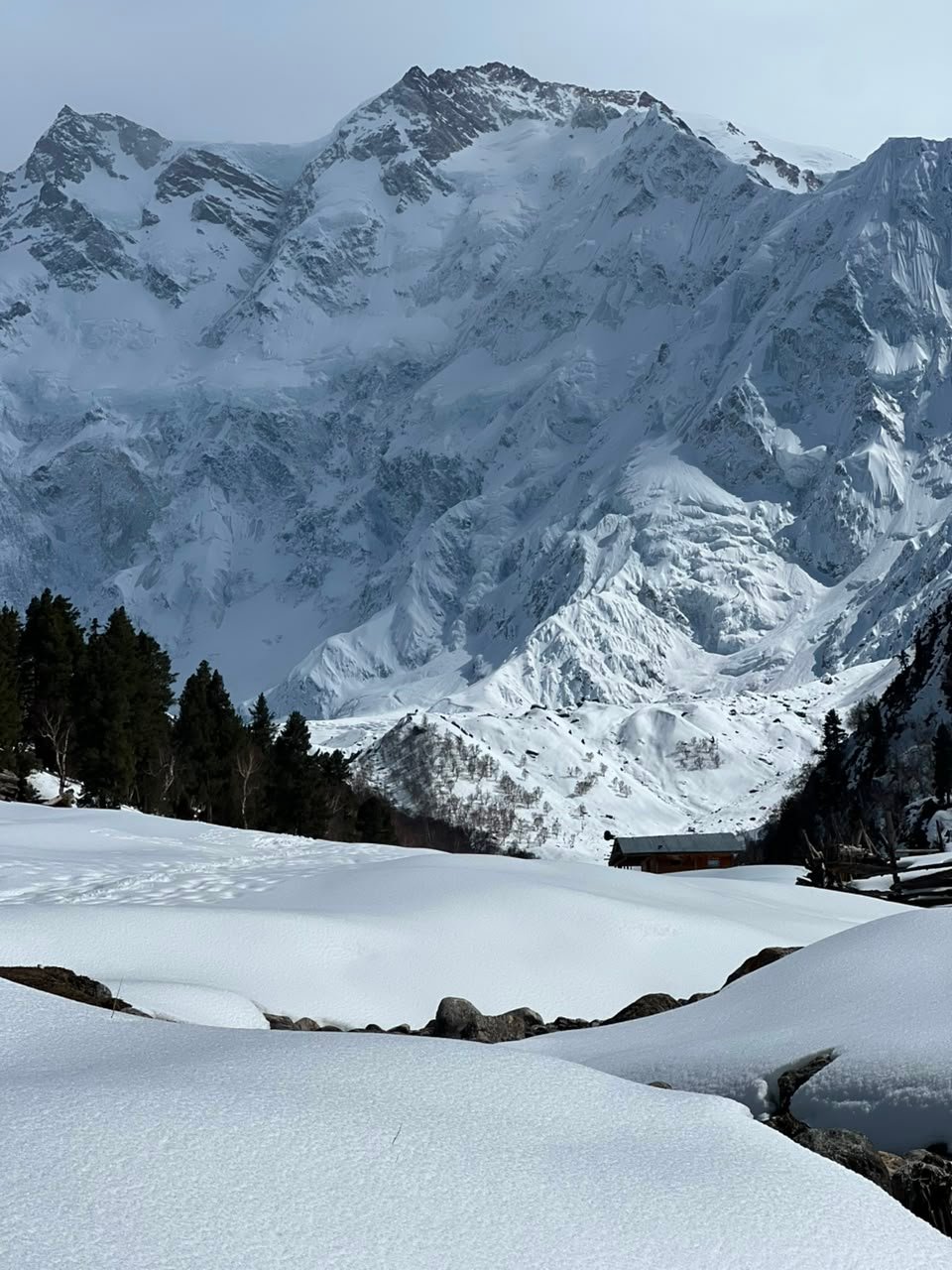
Nanga Parbat (8,126 m / 26,660 ft) is the ninth-highest mountain on Earth and the second-highest peak in Pakistan, standing as the far western sentinel of the Himalayan range in the Diamir District of Gilgit-Baltistan. The name is derived from the Sanskrit nanga parbata, meaning Naked Mountain — a reference to the bare, unforested rock faces that define the peak’s massive profile above the surrounding foothills. Nanga Parbat is geographically isolated from the main Karakoram by the gorge of the Indus River, which bends sharply around its base, and the mountain effectively constitutes a standalone massif at the junction of three great mountain systems: the Western Himalaya, the Karakoram, and the Hindu Kush. This unique geographic position exposes it to weather systems from multiple directions and contributes to the violent, unpredictable storm cycles that have defined its reputation.
The mountain has three enormous faces, each distinctive in character. The Diamir (West) Face is the site of the standard Kinshofer Route and is the most frequently attempted. The Rupal (South) Face — at approximately 4,600 m vertical relief, the highest mountain face on Earth — drops almost vertically to the Rupal Valley in a wall of ice and rock that has been called the greatest single mountain face in the world. The Rakhiot (North) Face, accessed via the Fairy Meadows approach, was the route of the first summit attempt and the 1953 first ascent. Every face and route on Nanga Parbat is characterized by extreme scale, significant objective hazard from avalanche and rockfall, and severe weather exposure. The mountain’s historical fatality rate — approximately one death for every three summits — reflects these conditions honestly. The summit success rate across all teams is approximately 30–35%.
Nanga Parbat’s history is among the most dramatic in Himalayan mountaineering. The 1895 attempt by Albert Mummery ended with his death — the first fatality on an 8,000 m peak. German expeditions in the 1930s suffered catastrophic losses in avalanches and storms, earning Nanga Parbat its Killer Mountain epithet. Hermann Buhl’s solo first ascent on 3 July 1953 — climbing the final 1,300 metres alone, reaching the summit at 7:00 PM, and surviving a standing bivy at over 8,000 m without oxygen or proper bivouac gear — remains one of the greatest individual achievements in mountaineering history. Reinhold Messner’s solo ascent via a new route on the Diamir Face in 1978 further cemented the mountain’s place in the legend of human endurance. In 2016, Simone Moro, Alex Txikon, and Muhammad Ali Sadpara completed the first winter ascent without supplemental oxygen, closing the final chapter of Nanga Parbat’s great historical firsts.
Equipment & Gear List
The following lists represent the minimum recommended equipment for a Nanga Parbat expedition via the Kinshofer Route. Note that Nanga Parbat’s four-camp system, severe weather, and the technical demands of the Kinshofer Wall require a more comprehensive hardware rack and higher fuel supply than the Gasherbrum peaks. An 8,000 m-rated down suit and sleeping bag are essential. Personal pack weights at Base Camp should not exceed 25 kg.
1. Clothing & Footwear
| Item | Qty | Notes |
| Down Suit (8,000 m rated) | 1 | Essential for summit day and C4; 800+ fill power; test fit over all layers |
| Hard Shell Jacket & Pants | 2 sets | Waterproof/windproof Gore-Tex; essential for Diamir Face storms |
| Softshell Jacket & Pants | 1 set | Mid-elevation climbing and camp use |
| Mid-Layer Fleece / Down Jacket | 2 | Insulation for Base Camp and lower camps |
| Base Layers (thermal top & bottom) | 3 sets | Moisture-wicking merino wool or synthetic; critical on multi-day summit bids |
| Gloves: Liner / Mid / Expedition Mitts | 1 pair each | Three-layer glove system; spare liner gloves strongly recommended |
| Balaclava & Neck Gaiter | 2 each | Wind and cold protection; summit headwall exposed to severe gusts |
| Warm Hat & Wide-Brim Sun Hat | 1 each | Beanie for camps; wide-brim for approach and Fairy Meadows |
| High-Altitude Boots (8,000 m rated) | 1 pair | Double boots e.g. La Sportiva G2 Evo or Scarpa Phantom 8000 |
| Trekking / Approach Boots | 1 pair | Fairy Meadows to Base Camp approach trek |
| Camp Booties (insulated) | 1 pair | Inside tent use at high camps |
| Gaiters | 1 pair | Snow exclusion on Kinshofer Wall and upper face couloirs |
| Trekking Socks (wool/synthetic) | 6 pairs | Thick for high altitude; thinner pairs for approach |
| Sunglasses (Category 4) | 2 pairs | Glacier UV is severe; glacier blindness risk on Diamir Face; always carry spare |
2. Climbing Hardware
| Item | Qty | Notes |
| Climbing Harness (expedition) | 1 | Must fit over full down suit; test before departure |
| Ascender / Jumar (pair) | 1 pair | Essential on Kinshofer Wall and fixed ropes above C2 |
| Belay / Rappel Device (ATC or Figure-8) | 1 | For rappel descents on Kinshofer Wall sections |
| Locking Carabiners | 10–12 | Mix of screw-gate and auto-locking |
| Non-locking Carabiners | 10–12 | Clipping fixed lines and running protection |
| Ice Axe (technical curved pick) | 1–2 | Technical axe for upper face; straight axe optional for approach |
| Crampons (12-point technical) | 1 pair | Anti-balling plates; compatible with 8,000 m boots; test before trip |
| Helmet (CE/UIAA certified) | 1 | Rockfall and ice debris hazard is significant on Nanga Parbat routes |
| Trekking Poles (telescoping) | 1 pair | Approach support and descent stability |
| Slings (120 cm & 60 cm) | 4–6 each | Anchor building and fixed rope clipping |
| Prussik Cords (6 mm, 60 cm) | 2 | Self-rescue and crevasse extrication |
| Snow Pickets / Deadman Anchors | 6–8 | Team shared; upper face anchor systems on Diamir Face |
| Ice Screws (17 cm) | 4–6 | Team shared; critical on Kinshofer Wall ice sections |
3. Camp & Bivouac Equipment
| Item | Qty/Spec | Notes |
| 4-Season Expedition Tent | 2-person | Wind-rated to 100 km/h; semi-geodesic freestanding; Nanga Parbat storms are severe |
| Sleeping Bag (-40°C rated) | 1 | For C4 and summit bid; 850+ fill power; test in cold conditions |
| Sleeping Bag (-20°C rated) | 1 | Base Camp and Camps 1 and 2 |
| Insulated Sleeping Pad (R-value 6+) | 2 | Foam + inflatable for redundancy on icy tent platforms at C3/C4 |
| Expedition Backpack (75–85 L) | 1 | Heavy load carrying between camps on Diamir Face |
| Summit Pack (30–35 L) | 1 | Lightweight summit day pack; target under 10 kg loaded |
| Expedition Duffel Bags | 2–3 | Porter loads to Fairy Meadows; max 25 kg each |
| High-Altitude Stove (MSR Reactor / Jet Boil) | 2 | Two stoves per team; spare burner essential; test in sub-zero conditions |
| Fuel Canisters | 35–40 | Higher consumption due to 4-camp system; ~3 canisters per camp per rotation |
| Insulated Cooking Pot & Mug | 1 set | Titanium or hard-anodised; insulated wide mug critical at altitude |
| Headlamp + Spare Batteries (lithium) | 2 headlamps | Summit departure is pre-dawn; lithium batteries only above 6,000 m |
| Water Bottles (insulated, 1 L wide-mouth) | 2 | Wide-mouth Nalgene prevents freezing above 7,000 m |
| Water Purification Tablets / Filter | 1 | Lower camps and approach; boil water at high altitude |
| High-Calorie Expedition Food | Full supply | Freeze-dried meals, nuts, energy gels and bars for all 4 camp rotations; ~4,500 kcal/day above 6,500 m |
4. Oxygen & Medical Equipment
| Item | Qty | Notes |
| Supplemental Oxygen Cylinders (4L) | 4–6 per climber | Strongly recommended above 7,500 m on Nanga Parbat; mandatory for emergencies |
| Oxygen Regulator + Mask | 1 set + spare | Altitude-rated regulator; flow rate 2–4 L/min on summit day |
| Gamow Bag (team, BC) | 1 | Portable hyperbaric chamber; critical for HACE/HAPE at remote BC |
| Pulse Oximeter | 3 (team) | Monitor SpO2 at every camp; primary safety and acclimatization tool |
| Dexamethasone 8 mg injectable | Per protocol | HACE emergency treatment — administer and descend immediately |
| Nifedipine 30 mg extended-release | Per protocol | HAPE emergency treatment; administer and descend |
| Diamox (Acetazolamide) 250 mg | Per protocol | Acclimatization support; prophylactic and therapeutic use from BC |
| SAT Phone + GPS / EPIRB Beacon | 1 each | Emergency communication; EPIRB for location in remote Diamir valley |
| Ibuprofen, Paracetamol, Co-codamol | Ample supply | Pain management, altitude headache, and fever throughout expedition |
| Oral Rehydration Salts + Loperamide | Ample supply | GI illness is common at altitude and during long approach drives |
Additional Medical Kit (per expedition)
- Ibuprofen 400 mg, paracetamol, co-codamol — pain management, altitude headache, fever
- Loperamide (Imodium) and oral rehydration salts — GI illness is common on long expeditions
- Blister and wound kit: moleskin, compeed pads, wound closures, antiseptic wipes
- Snowblindness drops: tetracaine for pain relief; antibiotic eye drops for infection
- Frostbite kit: ibuprofen 400 mg, aloe vera gel, non-adherent dressings, iloprost if available
- Throat lozenges and steam inhaler — severe high-altitude dry cough common on Nanga Parbat
- Sunscreen SPF 50+ and lip balm SPF 30 — glacier and snowfield UV is extreme
- Vitamin C, zinc, and iron supplements — immune support during extended 50-day expedition
- Antifungal cream and powder — foot hygiene critical during multi-week glacier camping
Affiliated with & Licence