LATEST
K2 Summer Expeditions 2026 — Now Accepting Bookings New Trek Added: Batura Glacier — Gilgit Zone Government Verified & Registered Agency · Skardu, GB 24/7 Customer Support · WhatsApp: +92 341 153 7783 Best Price Guarantee on All Packages Winter K2 Expedition Season · December – February K2 Summer Expeditions 2026 — Now Accepting Bookings New Trek Added: Batura Glacier — Gilgit Zone Government Verified & Registered Agency · Skardu, GB 24/7 Customer Support · WhatsApp: +92 341 153 7783 Best Price Guarantee on All Packages Winter K2 Expedition Season · December – February

Diran Peak (Minapin Peak)

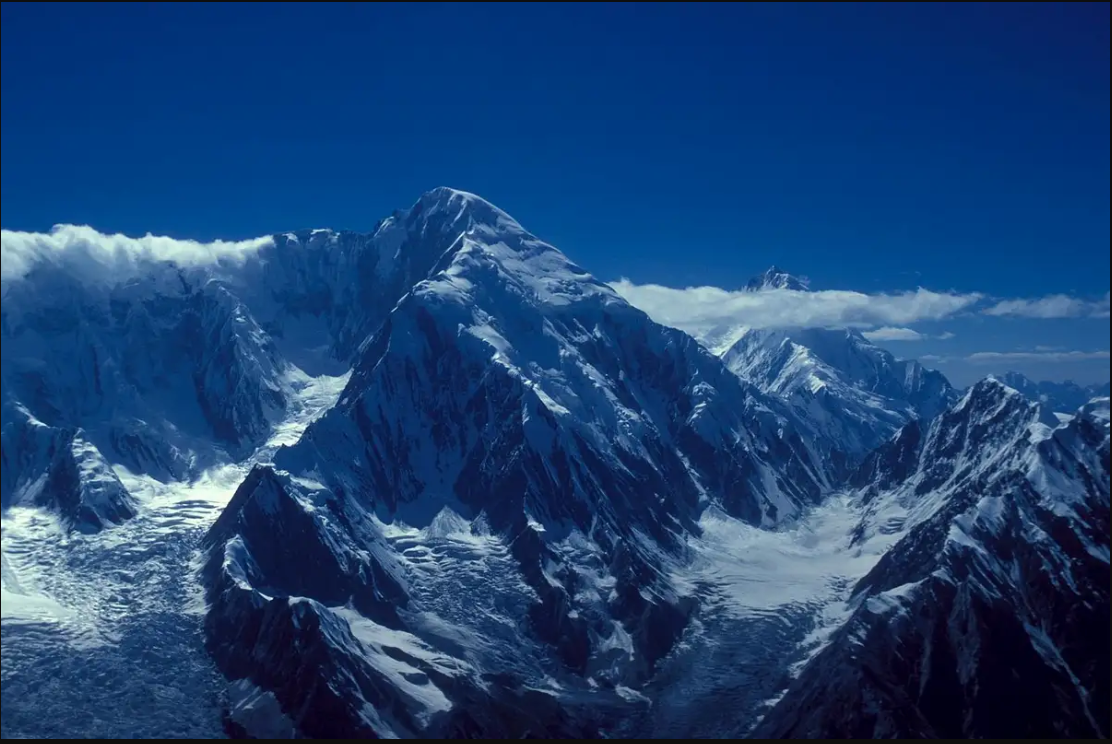
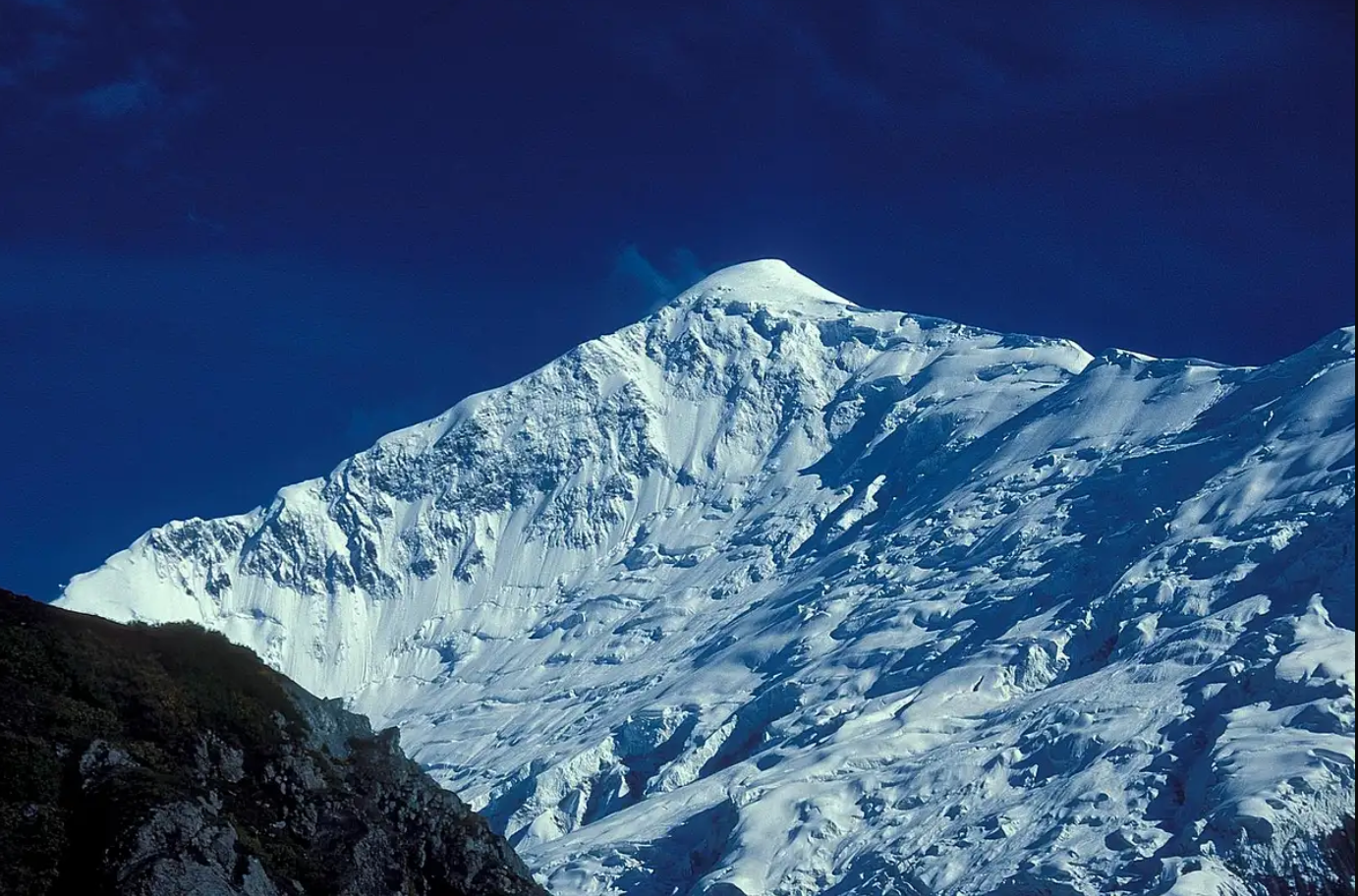
Diran Peak (7,273 m / 23,862 ft), also known as Minapin Peak after the village at its base, is a commanding 7,000 m summit in the Rakaposhi-Haramosh subrange of the Karakoram, standing in Nagar District of Gilgit-Baltistan between the great massifs of Rakaposhi (7,788 m) to the west and Haramosh (7,397 m) to the east. The mountain dominates both the Hunza Valley to the north and the Bagrot Valley to the south, and its south face is one of the most recognisable and frequently photographed mountain profiles in Pakistan, plainly visible from the Karakoram Highway as travellers pass through the Hunza region. Diran is surrounded by three significant glaciers — the Minapin, the Hinarchi, and the Baltar — and its proximity to the highway makes it one of the most accessible serious 7,000 m peaks in the entire Karakoram range, a characteristic that has made it increasingly popular with expedition teams seeking a high-quality but logistically compact mountain objective.

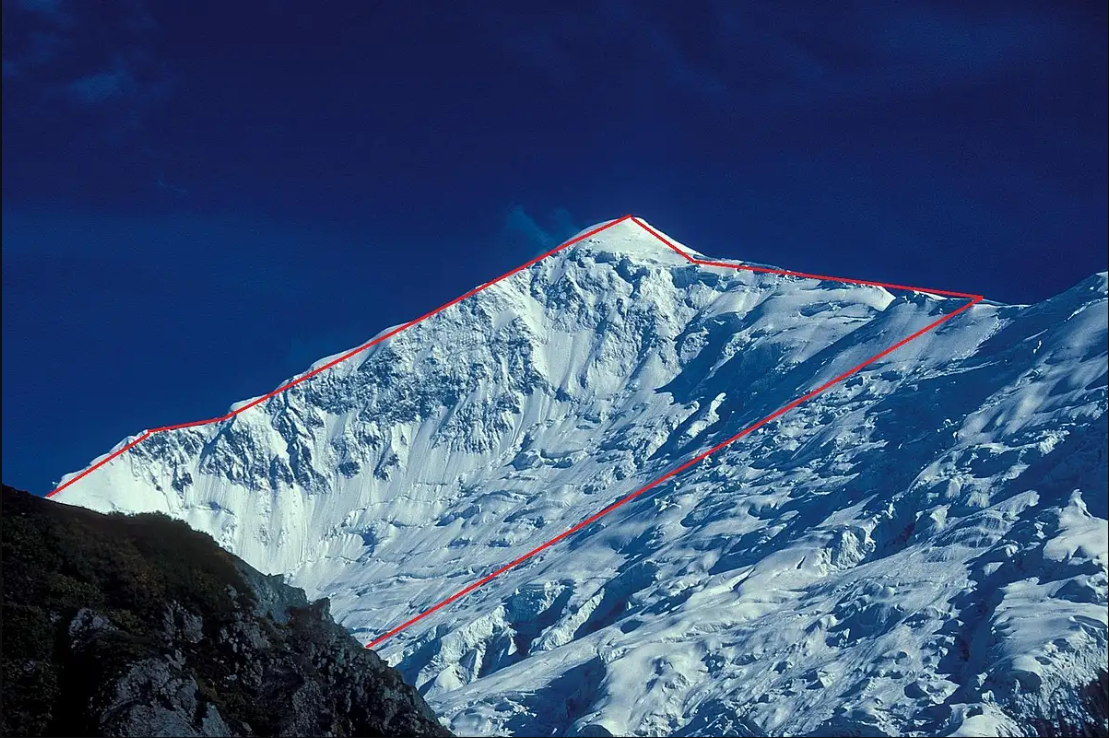
The character of Diran’s standard Northwest Ridge route is distinctive among the major Karakoram peaks. The upper mountain consists almost entirely of smooth, broad snowfields and wind-sculpted snow domes with only occasional bare rock — a continuous and aesthetically beautiful snow climb that rewards strong ice and snow technique but demands no rock climbing proficiency. The high sections are subjected to wind-driven spindrift and wind-compacted snow, which alternates between firm and breakable crust conditions depending on recent weather. The most technically significant challenge specific to Diran, identified by every expedition since the first ascent, is the prevalence of hidden crevasses on the upper Northwest Ridge, where the smooth snow surface conceals voids beneath deceptively solid snow bridges. Roped travel is non-negotiable above Camp 2, and crevasse rescue competence is an essential prerequisite for all team members.

The first ascent of Diran Peak was made on an unspecified date in 1968 by a three-member Austrian expedition. The summit team encountered the hidden crevasses and broad upper snow domes that would become defining features of all subsequent routes on the mountain. Today, Diran is a respected and rewarding objective for alpinists seeking a first serious 7,000 m peak in the Karakoram, offering a genuine high-altitude snow and glacier experience with the added advantages of a short approach, superb Hunza Valley scenery, and greater logistical flexibility than the long Baltoro-approach expeditions. From the summit of Diran, on a clear day, the panorama extends across the full breadth of the western Karakoram: Rakaposhi, Haramosh, the Hispar Glacier, Ultar Sar, Batura Sar, and the sinuous green valley of Hunza far below.

Equipment & Gear List

The following lists represent the minimum recommended equipment for a Diran Peak expedition via the Northwest Ridge. Diran’s predominantly snow-and-ice terrain requires no rock protection rack, but the hidden crevasse hazard on the upper ridge makes a full crevasse rescue kit and generous snow anchor supplies mandatory — more so than on peaks with harder, more defined terrain. Personal pack weights at Base Camp should not exceed 22 kg.

1. Clothing & Footwear

Item Qty Notes
Down Suit (7,000 m+ rated) 1 Essential for summit day and C3; 750–800 fill power minimum
Hard Shell Jacket & Pants 2 sets Waterproof/windproof Gore-Tex; Diran exposed to strong Hunza valley winds
Softshell Jacket & Pants 1 set Mid-elevation climbing and Base Camp use
Mid-Layer Fleece / Down Jacket 2 Insulation for Base Camp and lower camps
Base Layers (thermal top & bottom) 3 sets Moisture-wicking merino wool or synthetic; change after each rotation
Gloves: Liner / Mid / Expedition Mitts 1 pair each Three-layer system; upper snow domes exposed to fierce wind-driven spindrift
Balaclava & Neck Gaiter 2 each Wind protection above 6,500 m on upper Northwest Ridge
Warm Hat & Wide-Brim Sun Hat 1 each Beanie for camps; wide brim for Minapin Glacier approach
High-Altitude Boots (7,000 m+ rated) 1 pair Double boots e.g. La Sportiva Olympus Mons or Scarpa Phantom 8000
Trekking / Approach Boots 1 pair For Minapin village to Base Camp approach trek
Camp Booties (insulated) 1 pair Inside tent use at high camps; temperatures very low at C3
Gaiters 1 pair Essential on wind-blown upper snow slopes and crevasse zones
Trekking Socks (wool/synthetic) 6 pairs Thick cushioned pairs for high altitude; lighter for approach
Sunglasses (Category 4) 2 pairs Glacier UV on Minapin and Hinarchi glaciers is severe; spare mandatory

2. Climbing Hardware

Item Qty Notes
Climbing Harness (expedition) 1 Must fit over down suit; check fit with all layers before departure
Ascender / Jumar (pair) 1 pair For fixed-rope ascent; essential on crevasse-prone upper Northwest Ridge
Belay / Rappel Device (ATC or Figure-8) 1 For descent rappels on steep sections above C2
Locking Carabiners 8–10 Mix of screw-gate and auto-locking
Non-locking Carabiners 8–10 Clipping fixed lines and running protection
Ice Axe (technical curved pick) 1–2 One technical axe for steep sections; one straight for glacier approach
Crampons (12-point technical) 1 pair Anti-balling plates; compatible with 7,000 m boots
Helmet (CE/UIAA certified) 1 Rockfall and wind-dislodged ice debris risk on upper ridge
Trekking Poles (telescoping) 1 pair Minapin Glacier approach and descent stability
Slings (120 cm & 60 cm) 4–6 each For anchor building on snow and mixed terrain above C2
Prussik Cords (6 mm, 60 cm) 2 Self-rescue and crevasse extrication — hidden crevasses are a known hazard
Snow Pickets / Snow Stakes 6–8 Team shared; critical for anchor systems on Diran’s upper snow domes
Crevasse Rescue Kit (full) 1 per rope team T-anchor system, pulleys, extra prussiks; hidden crevasses reported on upper NW Ridge

3. Camp & Bivouac Equipment

Item Qty/Spec Notes
4-Season Expedition Tent 2-person Wind-rated 80+ km/h; wind exposure on upper Diran is severe
Sleeping Bag (-30°C rated) 1 For C3 and summit bid; 800+ fill power down
Sleeping Bag (-15°C rated) 1 Base Camp and lower camps (C1/C2)
Insulated Sleeping Pad (R-value 5+) 2 Foam + inflatable for redundancy on icy tent platforms
Expedition Backpack (70–80 L) 1 Load carrying between camps on Northwest Ridge
Summit Pack (25–30 L) 1 Lightweight summit day pack; target under 8 kg loaded
Expedition Duffel Bags 2–3 For porter loads to Base Camp; max 25 kg each
High-Altitude Stove (MSR Reactor / Jet Boil) 2 Two stoves per team; spare burner essential; test in sub-zero before trip
Fuel Canisters 25–30 ~3 canisters per camp per rotation; 3-camp system on Diran
Insulated Cooking Pot & Mug 1 set Titanium or hard-anodised; insulated mug critical at altitude
Headlamp + Spare Batteries (lithium) 2 headlamps Pre-dawn summit departure; lithium batteries only above 5,500 m
Water Bottles (insulated, 1 L wide-mouth) 2 Wide-mouth Nalgene; prevents freezing above 6,000 m
Water Purification Tablets / Filter 1 Lower camps; boil at high altitude
High-Calorie Expedition Food Full supply Freeze-dried meals, nuts, gels, energy bars; ~4,000 kcal/day above 5,500 m

4. Oxygen & Medical Equipment

Item Qty Notes
Supplemental Oxygen Cylinders (4L) 2–4 per climber Recommended above 6,500 m; mandatory for emergency use on all teams
Oxygen Regulator + Mask 1 set + spare Altitude-rated regulator; flow rate 2–4 L/min on summit day if used
Gamow Bag (team, BC) 1 Portable hyperbaric chamber; critical for HACE/HAPE at remote Base Camp
Pulse Oximeter 3 (team) Monitor SpO2 at every camp; primary safety and acclimatization tool
Dexamethasone 8 mg injectable Per protocol HACE emergency treatment — administer and descend immediately
Nifedipine 30 mg extended-release Per protocol HAPE emergency treatment — administer and descend
Diamox (Acetazolamide) 250 mg Per protocol Acclimatization support; begin 2 days before Base Camp if needed
SAT Phone + GPS / EPIRB Beacon 1 each Emergency communication; relatively easier helicopter access than Baltoro peaks
Ibuprofen, Paracetamol, Co-codamol Ample supply Pain management, altitude headache, and fever throughout expedition
Oral Rehydration Salts + Loperamide Ample supply GI illness common; essential for hydration on long summit days

Additional Medical Kit (per expedition)

  • Ibuprofen 400 mg, paracetamol, co-codamol — pain management, altitude headache, and fever
  • Loperamide (Imodium) and oral rehydration salts — GI illness common at altitude
  • Blister and wound kit: moleskin, compeed pads, wound closure strips, antiseptic wipes
  • Snowblindness drops: tetracaine for pain relief; antibiotic eye drops for secondary infection
Q1: What is Diran Peak and what makes it distinctive among Pakistan's high peaks?
Diran Peak (7,273 m / 23,862 ft), also known as Minapin Peak after the village at its foot, is a prominent 7,000 m mountain in the Rakaposhi-Haramosh subrange of the Karakoram, located in the Nagar District of Gilgit-Baltistan. It stands between the Haramosh Massif to the east and the great Rakaposhi (7,788 m) to the west, dominating both the Hunza Valley and the Bagrot Valley from its commanding position above the Minapin, Hinarchi, and Baltar glaciers. Diran is distinctive among Pakistan's high peaks for several reasons: its proximity to the Karakoram Highway makes it one of the most accessible serious 7,000 m peaks in the country; its south face is plainly visible from the KKH, making it one of the most photographed peaks in Hunza; and its upper slopes consist of extensive, smooth snow domes with only occasional bare rock, offering a predominantly snow-and-ice climbing experience.
Q2: What is the standard route on Diran Peak?
The standard and historically most-used route is the Northwest Ridge, approached via the Minapin Glacier from Minapin village. From Base Camp (approximately 4,200 m) on the Minapin Glacier, the route ascends the lower Northwest Ridge through couloirs and snow slopes to Camp 1, then continues on sustained upper snowfields to Camp 2 and Camp 3. The route's characteristic upper section involves smooth, wind-blown snow domes and a series of broad snowfields leading to the summit at 7,273 m. The key technical and safety challenge identified by the 1968 first-ascent team and all subsequent expeditions is the presence of hidden crevasses on the upper Northwest Ridge, where wind-blown snow bridges conceal voids. All roped travel on the upper mountain is essential. The summit dome itself provides a clear and striking viewpoint over the Hispar Glacier, Rakaposhi, and the Hunza Valley far below.
Q3: When is the best season to climb Diran Peak?
The optimal climbing season for Diran Peak is from late May to early August. Unlike the Baltoro peaks (K2, Broad Peak, the Gasherbrums), Diran's location in the Nagar-Hunza area gives it a slightly longer accessible weather window, with late May and early June viable for strong acclimatized teams. July is typically the most settled month with the best summit-day weather. Diran is relatively sheltered from the worst Karakoram storm cycles by the Rakaposhi massif to the west, but is exposed to strong winds from the north and northwest on its upper ridges. Weather forecasts should be monitored via MeteoBlue high-altitude models throughout the expedition. Pre-monsoon (June–July) is strongly preferred over post-monsoon (September), when deteriorating conditions and early winter winds are a significant risk.
Q4: What permits are required for a Diran Peak expedition?
A Royalty Permit from Pakistan's Ministry of Tourism and the Pakistan Alpine Club (PAC) is mandatory. The current permit fee for Diran Peak is approximately USD 800–1,000 per climber — lower than the 8,000 m peaks but still a significant cost. All expeditions must be accompanied by a government-appointed Liaison Officer (LO), whose salary and all expenses are the team's responsibility. An environmental deposit (refundable on clean departure) and compulsory porter accident insurance are required. Local village-level coordination with the Minapin and Nagar communities is handled by the expedition operator. Unlike the Baltoro peaks, Diran does not require the same logistics chain for an extended Baltoro approach, making the permit process relatively straightforward. Applications should be submitted at least 2–3 months in advance.
Q5: What is the hidden crevasse hazard on Diran and how is it managed?
Hidden crevasses are the primary and most distinctive objective hazard on Diran Peak's upper Northwest Ridge. The smooth, wind-blown snow domes above approximately 6,000 m can conceal large crevasses beneath deceptively solid-looking snow bridges, a feature specifically noted by the 1968 Austrian first-ascent team. Management of this hazard requires all members to travel roped at all times above Camp 2, with consistent rope spacing and awareness of bridging sounds underfoot. Probing with poles or ice axes before stepping on a suspect snow bridge is good practice. Teams should fix ropes through the most heavily crevassed zones on acclimatization rotations and mark safe passage lines with wands. The risk is greatest in the late afternoon when solar warming softens snow bridges; all descent through crevassed sections should be completed in the morning while snow is firm.
Q6: How accessible is Diran Peak compared to other major peaks in Pakistan?
Diran Peak is one of the most accessible serious high-altitude peaks in Pakistan. The Karakoram Highway passes within direct view of Diran's south face, and the trailhead at Minapin village is reachable by road from Islamabad in approximately 14–16 hours of driving (or a short flight to Gilgit followed by a 2-hour drive). This contrasts sharply with the K2 and Gasherbrum expeditions, which require the lengthy Baltoro Glacier approach of 6–7 days on foot. The relative accessibility of Diran reduces logistical costs, shortens the total expedition duration, and means helicopter evacuation is considerably more viable in an emergency than at the remote Baltoro-area base camps. The approach trek from Minapin to Base Camp is only 1–2 days, making Diran an attractive objective for teams with tighter schedules or lower budgets.
Q7: What level of experience is required for Diran Peak?
Diran is suitable for experienced mountaineers making a first serious attempt at a 7,000 m peak, provided they have solid technical skills and prior high-altitude experience. Recommended prerequisites include at least one summit above 6,000 m, confident crampon and ice axe technique on slopes up to 50°, fixed-rope ascending skills, and crevasse rescue training — the last being particularly important given Diran's hidden crevasse hazard. The predominantly snow-and-ice character of the standard route means no rock climbing skills are specifically required, but rope-team discipline and sound glacier travel judgment are essential. The summit altitude of 7,273 m places Diran comfortably in the high-altitude category where serious acclimatization, fitness, and weather awareness are non-negotiable.
Q8: Is supplemental oxygen used on Diran Peak?
Diran Peak (7,273 m) sits below the conventional 8,000 m 'death zone' threshold and is routinely climbed without supplemental oxygen by acclimatized teams. However, the summit altitude is still high enough to cause significant hypoxia, and the prolonged summit day from Camp 3 (approximately 6,500 m) requires sustained effort above 6,500 m for up to 10 hours. Supplemental oxygen is recommended for any climber without prior 7,000 m experience and is mandatory for all teams as an emergency resource. Teams carrying oxygen should plan for a minimum of 2 cylinders per climber, with additional cylinders available at Base Camp for emergency use.
Q9: How long does a complete Diran Peak expedition take and what does it cost?
A complete Diran Peak expedition runs approximately 38–42 days from Islamabad arrival to return, including the 3-day KKH drive to Minapin, 2-day approach to Base Camp, 20 days at Base Camp and on the mountain for acclimatization rotations and summit bid (including weather waiting), 3 days descending to Minapin, and 3 days driving back to Islamabad. This is significantly shorter than the Baltoro-approach expeditions (K2, Broad Peak, Gasherbrums) due to the compact approach. Fully supported guided expeditions typically cost between USD 7,000 and USD 16,000 per climber. Independent expeditions can be arranged for USD 4,000–8,000 but require full self-sufficiency. The lower permit fee and shorter approach logistics make Diran one of the more cost-effective serious 7,000 m objectives in Pakistan.
Q10: What are the main health risks and how are emergencies managed on Diran?
The primary altitude health risks on Diran are Acute Mountain Sickness (AMS), High Altitude Cerebral Edema (HACE), and High Altitude Pulmonary Edema (HAPE), all of which are significant above 5,000 m. Daily SpO2 monitoring at all camps is essential. The expedition doctor stationed at Base Camp manages health assessments throughout; any deterioration above Camp 1 must trigger immediate descent. The Base Camp Gamow bag provides emergency hyperbaric therapy. One significant advantage of Diran over the Baltoro peaks is helicopter evacuation accessibility: Diran Base Camp (4,200 m) is within reach of Pakistani military and civilian helicopters from Gilgit in good weather, and the shorter approach means evacuation coordination is faster. All team members must still be trained in emergency first aid procedures and self-rescue, as weather can delay helicopter access for 24–48 hours.
Day 1: Islamabad Arrival
Arrive at Islamabad International Airport. Transfer to hotel. Team briefing, permit collection from Pakistan Alpine Club (PAC) and Ministry of Tourism, and gear inspection. Rest and final equipment sourcing in Islamabad markets.
Day 2: Islamabad — Ministry Briefing
Official briefing at the Ministry of Tourism and PAC. Liaison Officer (LO) assigned. Final paperwork, porter insurance confirmed, and gear consolidation. Short acclimatization walk in Islamabad (Margalla Hills trail recommended). Rest overnight.
Day 3: Islamabad → Chilas
Drive approximately 7–8 hours along the Karakoram Highway (KKH) through Hazara and Kohistan to Chilas (1,260 m) on the Indus River. Spectacular gorge scenery. First distant views of the Karakoram peaks. Overnight hotel in Chilas.
Day 4: Chilas → Karimabad (Hunza)
Drive approximately 3–4 hours north along the Karakoram Highway to Karimabad (2,438 m), the historic capital of the former Hunza state. Outstanding views of Rakaposhi (7,788 m) and the first sightings of Diran Peak's southern profile. Visit Baltit and Altit Forts. Overnight hotel
Day 5: Karimabad → Minapin Village
Drive approximately 1 hour from Karimabad to Minapin village (2,350 m) at the foot of the Minapin Glacier — the staging village for all Diran Peak expeditions. Meet local porters and community representatives. Gear check, porter loads finalized (max 25 kg). Overnight camp at Minapin.
Day 6: Minapin → Taghafari
Drive or short walk to the Taghafari area (approx. 3,000 m), the last vehicle-accessible point and upper staging camp below the Minapin Glacier. Set up advance camp. Acclimatization walks on lower glacier moraine. Porter briefing and route reconnaissance. Overnight camp.
Day 7: Taghafari → Diran Base Camp
Trek 5–6 hours up the Minapin Glacier moraine and lower ice to Diran Peak Base Camp (4,200 m). Establish Base Camp — set up all tents, cook station, medical bay, and communications. Expedition doctor conducts first health assessments and SpO2 readings.
Day 8–11: Base Camp Acclimatization
Rest and acclimatization at Base Camp (4,200 m). Short glacier walks on the Minapin and lower Hinarchi Glaciers. Doctor monitors SpO2 and health daily. Equipment sorted; Camp 1 loads prepared. Route above BC reconnoitred. Weather monitoring begins.
Day 12–15: Camp 1 Rotation (5,200 m)
First rotation up the lower Northwest Ridge approach couloirs and snow slopes to Camp 1. Fix ropes on steeper initial sections. Sleep one night at C1 for acclimatization. Return to Base Camp for 2-day rest and recovery.
Day 16–19: Camp 2 Rotation (5,900 m)
Second rotation. Ascend through the sustained upper snow fields and wind-affected snow domes to Camp 2. Stock C2 with food, fuel, and equipment. Continue rope-fixing above C2 if required. Return to BC for full 2-day rest.
Day 20–23: Camp 3 Rotation (6,500 m)
Third rotation up the higher Northwest Ridge to Camp 3, below the summit snow domes. Oxygen systems checked and deployed if used. Hidden crevasse zones traversed with fixed rope protection. Return to BC for 2–3 day rest. Doctor conducts final fitness assessment.
Day 24–26: Weather Window Monitoring
Active weather monitoring from Base Camp via MeteoBlue high-altitude satellite forecasts. Fitness maintenance walks on lower glacier. Summit logistics finalized. Team leader assesses snow stability on upper ridge via telescope from BC.
Day 27: BC → Camp 1 (Summit Bid Day 1)
Depart Base Camp. Ascend to Camp 1 (5,200 m). Rest, high-calorie meals, and full equipment checks. Weather forecast reviewed over radio with Base Camp. Prepare packs for C2 push next morning.
Day 28: Camp 1 → Camp 2 (Summit Bid Day 2)
Ascend to Camp 2 (5,900 m). Steady, energy-conserving pace. Warm liquid hydration critical. Limit time outside tent. Weather confirmed for C3 and summit push.
Day 29: Camp 2 → Camp 3 (Summit Bid Day 3)
Ascend to Camp 3 (6,500 m). Summit pack trimmed to under 8 kg. Oxygen systems pressure-checked if used. Crevasse zones crossed carefully with rope team. Final weather forecast confirmed over radio. Sleep by 6:00 PM.
Day 30: Summit Day (7,273 m)
Depart C3 at 1:00–2:00 AM. Ascend the upper Northwest Ridge snow domes and wind-crusted snowfields to the summit of Diran Peak (7,273 m). Panoramic views of Rakaposhi, the Hispar Glacier, Haramosh, and the Hunza Valley. Descend to C2 or C3 the same day. Critical: begin descent by 1:00 PM
Day 31–32: Descent to Base Camp
Day 31: Descend from high camps through C2 and C1 to Base Camp. Full medical checks, rehydration, and celebration. Day 32: Full rest day at Base Camp.
Day 33: Base Camp → Taghafari
Strike Base Camp and begin the descent. Trek back down the Minapin Glacier to Taghafari staging camp (approx. 3,000 m). Porter wages prepared for final settlement.
Day 34: Taghafari → Minapin Village
Complete the descent from Taghafari to Minapin village (2,350 m). Porter wages settled in full at Minapin. Farewell to local community. Overnight camp or guesthouse at Minapin.
Day 35: Minapin → Karimabad
Drive approximately 1 hour from Minapin to Karimabad. Hot shower, hotel rest, and celebration dinner. Rest day in the Hunza Valley. Visit Altit Fort and enjoy the renowned Hunza apricot orchards.
Day 36: Karimabad Rest & Sightseeing
Optional rest day in Karimabad. Visit Eagle's Nest viewpoint for panoramic views of Rakaposhi, Diran, Ultar Sar, and the Hunza Valley. Short hike for final altitude acclimatization reversal. Team debrief.
Day 37: Karimabad → Chilas
Drive approximately 3–4 hours south along the Karakoram Highway from Karimabad to Chilas (1,260 m). Overnight hotel.
Day 38: Chilas → Islamabad
Drive approximately 7–8 hours from Chilas to Islamabad via KKH. Permits and Liaison Officer paperwork returned to PAC and Ministry of Tourism. Overnight hotel in Islamabad.
Day 39 Islamabad — Debriefing
Official post-expedition debriefing at the Ministry of Tourism. Expedition documentation and environmental deposit refund processed. Final team dinner. Rest overnight.
Day 40 Fly to Home Country
Transfer to Islamabad International Airport. Depart for home. Expedition formally concludes.

Fill up the Form

Inquiry Form

Affiliated with & Licence

Affiliated 1
Affiliated 2
Affiliated 3
Chat with us on WhatsApp
Scroll to Top