LATEST
K2 Summer Expeditions 2026 — Now Accepting Bookings New Trek Added: Batura Glacier — Gilgit Zone Government Verified & Registered Agency · Skardu, GB 24/7 Customer Support · WhatsApp: +92 341 153 7783 Best Price Guarantee on All Packages Winter K2 Expedition Season · December – February K2 Summer Expeditions 2026 — Now Accepting Bookings New Trek Added: Batura Glacier — Gilgit Zone Government Verified & Registered Agency · Skardu, GB 24/7 Customer Support · WhatsApp: +92 341 153 7783 Best Price Guarantee on All Packages Winter K2 Expedition Season · December – February

Gasherbrum IV Expedition

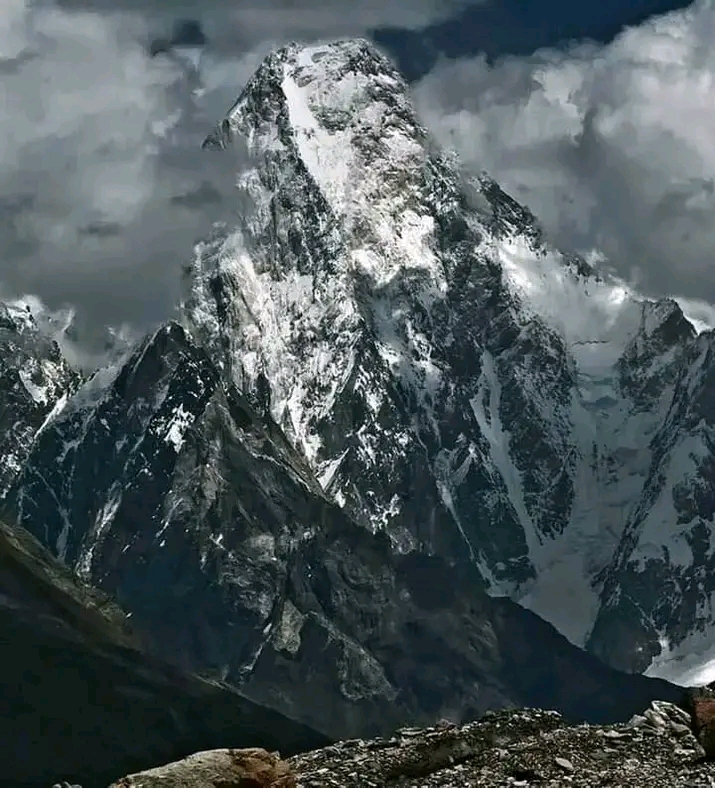
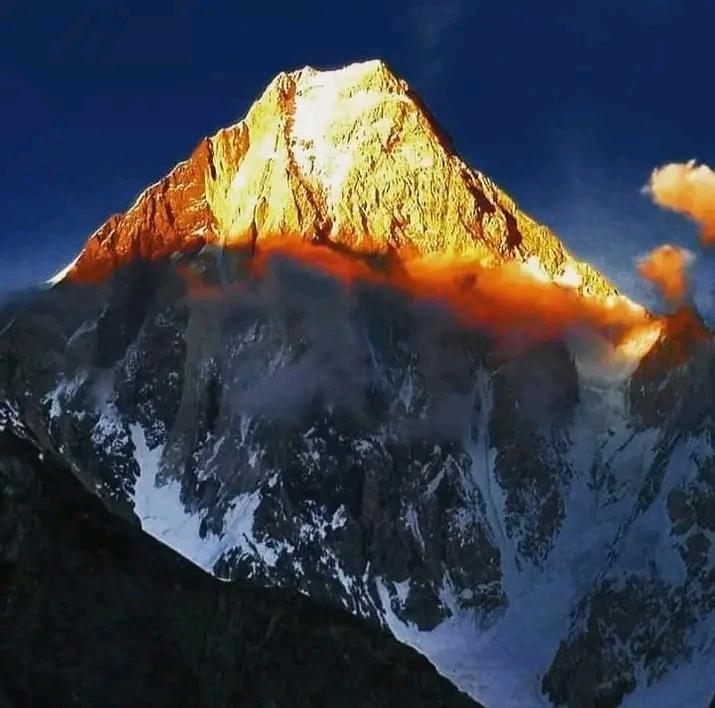
Gasherbrum IV (7,925 m / 26,001 ft), designated K3 during the Great Trigonometrical Survey of the Indian subcontinent, is the seventeenth-highest mountain in the world and the sixth-highest peak in Pakistan. It stands at the northeastern end of the Baltoro Glacier within the Gasherbrum massif, adjacent to its taller neighbours Gasherbrum I (8,080 m) and Gasherbrum II (8,035 m), sharing the same Base Camp on the South Gasherbrum Glacier. Despite its altitude being below the 8,000 m threshold, Gasherbrum IV is universally regarded by elite Himalayan climbers as technically more demanding than K2 and arguably the most technically difficult of all major Karakoram peaks. Its distinctive, near-vertical West Face — a 2,800-metre wall of granite, gneiss, and ice — has inspired awe and trepidation in equal measure since its scale was first appreciated by early Baltoro explorers.

The mountain’s formidable reputation is fully justified by its record. In the entire history of Himalayan mountaineering, fewer than 20 individual climbers have reached the summit of Gasherbrum IV across all routes, from over 30 serious expeditions — a summit success rate under 15% per attempt. No route on G-IV offers a technically moderate line: every approach involves sustained hard rock and mixed climbing at grades that would challenge experienced alpinists at sea level, let alone at altitudes above 6,500 m where hypoxia severely degrades technical performance. The West Face route, established in full by a Korean team in 1997 at a grade of 5.10 A3, is the current standard line and requires a team capable of leading and aiding on near-vertical granite at altitude, managing bivouacs on a near-vertical face, and navigating complex mixed terrain throughout. Walter Bonatti — one of the greatest alpinists of the twentieth century — described the first ascent of G-IV in 1958 as the most difficult climb of his career.

The first ascent of Gasherbrum IV was made on 6 August 1958 by the legendary Italian alpinists Walter Bonatti and Carlo Mauri, via the Northeast Ridge from the Gasherbrum La. The climb is considered one of the most technically demanding first ascents of the 1950s Himalayan golden age. The second major line — the full West Face — was first climbed on 17 August 1997 by a Korean expedition comprising Bang Jung-ho, Kim Tong-kwan, and Yoo Huk-jae, a landmark achievement rated as one of the hardest routes ever completed on an 8,000 m-class peak. To this day, G-IV remains one of the most seldom-summited and most coveted objectives for the world’s elite high-altitude technical climbers.

Equipment & Gear List

The gear requirements for Gasherbrum IV are substantially different from all other peaks in this series. G-IV demands a comprehensive technical rock and mixed climbing rack, an extended rope complement for leading and fixing pitches, and emergency bivouac equipment for unplanned overnight stops on the near-vertical West Face. Total equipment weight per climber is significantly higher than on snow-and-ice peaks. Personal pack weights at Base Camp may approach 28–30 kg for technical leads.

1. Clothing & Footwear

Item Qty Notes
Down Suit (8,000 m rated) 1 Must allow freedom of movement for technical rock climbing; test all moves before departure
Hard Shell Jacket & Pants 2 sets Waterproof/windproof Gore-Tex; G-IV’s West Face is fully exposed to Karakoram storms
Softshell Jacket & Pants 1 set Mid-elevation climbing and technical pitch work on the West Face
Mid-Layer Fleece / Down Jacket 2 Insulation for Base Camp and lower camps
Base Layers (thermal top & bottom) 3 sets Moisture-wicking; critical on multi-day technical summit bids
Gloves: Liner / Rock / Mid / Expedition Mitts 1 pair each Four-layer system; thin rock gloves for technical pitches, mitts for snow sections
Balaclava & Neck Gaiter 2 each Wind protection above 7,000 m on the exposed Northwest Ridge
Warm Hat & Sun Hat 1 each Beanie for camps; sun hat for Baltoro approach
High-Altitude Boots (8,000 m rated) 1 pair Must be compatible with technical crampons on mixed terrain; La Sportiva G2 Evo or similar
Approach / Rock Shoes 1 pair For lower technical pitches where down boots are too stiff (optional)
Camp Booties (insulated) 1 pair Inside tents at high camps; essential at C3 (7,250 m)
Gaiters 1 pair Snow and ice exclusion on West Face lower approaches
Trekking Socks (wool/synthetic) 6 pairs Thick for high altitude; thinner for Baltoro approach
Sunglasses (Category 4) 2 pairs Mandatory on Baltoro and South Gasherbrum Glacier; spare pair essential

2. Climbing Hardware

Item Qty Notes
Climbing Harness (expedition, lightweight) 1 Must fit over down suit AND allow free movement on technical rock
Ascender / Jumar (pair) 1 pair For fixed-rope ascent on steep ice and mixed sections below C2
Belay Device (Grigri or equivalent) 1 For rappel descents on technical West Face pitches; autolocking preferred
Locking Carabiners 12–15 Higher number required for technical route — anchor building, belay stations
Non-locking Carabiners 15–20 Running protection on rock and mixed pitches
Ice Axe (technical curved pick) 2 Two technical axes required — one for climbing, one backup
Crampons (12-point, mono/dual front) 1 pair Technical front points essential on G-IV’s mixed ground
Helmet (CE/UIAA, lightweight) 1 Rockfall hazard extreme on West Face — never remove above BC
Trekking Poles (telescoping) 1 pair Baltoro approach and descent; stowed during technical climbing
Rock Protection: Nuts (full set) 1 set Sizes 1–10 for West Face crack systems
Rock Protection: Cams (0.3–3 inch) 1 set For wider crack pitches on the upper West Face
Pitons (knifeblade, angle, lost arrow) 6–8 For aid sections up to A2/A3; essential on overhanging West Face crux
Ice Screws (17 cm & 22 cm) 6–8 Team shared; West Face ice bands and upper ridge
Slings (120 cm & 60 cm) 6–8 each Anchor building on mixed terrain; more required than on snow peaks
Prussik Cords (6 mm, 60 cm) 2 Self-rescue and crevasse extrication
Snow Pickets 4–6 Team shared; snow anchor systems above C2
Ropes: 60 m dynamic (9 mm) 4 per team For leading and fixing technical West Face pitches
Ropes: 200 m static (8 mm) Per team Fixed ropes on lower approach sections and rappel lines

3. Camp & Bivouac Equipment

Item Qty/Spec Notes
4-Season Expedition Tent (reinforced) 2-person Wind-rated 100+ km/h; G-IV’s West Face camps fully exposed
Sleeping Bag (-40°C rated) 1 For C3 and summit bid; 850+ fill power; extended time at 7,250 m
Sleeping Bag (-20°C rated) 1 Base Camp and Camps 1 and 2
Bivouac Sack (emergency) 1 per climber Mandatory on G-IV — unplanned bivouacs on technical terrain are a real risk
Insulated Sleeping Pad (R-value 6+) 2 Foam + inflatable; tent platforms on G-IV are cramped and steep
Expedition Backpack (80–90 L) 1 Heavy load carrying; technical gear adds significant weight
Summit / Technical Pack (35–40 L) 1 Must carry full technical rack, ropes, and safety gear
Expedition Duffel Bags 2–3 For porter loads; max 25 kg each to Askole
High-Altitude Stove (MSR Reactor x2) 2 per team Two stoves per team; higher consumption on extended technical bids
Fuel Canisters 40–50 Higher consumption due to extended camp occupancy during technical bid delays
Insulated Cooking Pot & Mug 1 set Titanium; insulated mug critical at altitude
Headlamp + Spare Batteries (lithium) 2 headlamps Pre-dawn and nighttime technical climbing; lithium only above 6,000 m
Water Bottles (insulated, 1 L wide-mouth) 2 Wide-mouth Nalgene; prevents freezing above 7,000 m
Portaledge (advanced teams) 1 (optional) For planned bivouacs on vertical West Face sections if required

4. Oxygen & Medical Equipment

Item Qty Notes
Supplemental Oxygen Cylinders (4L) 4–6 per climber Strongly recommended above 7,500 m; slow technical progress increases exposure time
Oxygen Regulator + Mask 1 set + spare Altitude-rated; technical climbing limits mask use; use at camps for recovery
Gamow Bag (team, BC) 1 Portable hyperbaric chamber; essential for HACE/HAPE at remote Base Camp
Pulse Oximeter 3 (team) Monitor SpO2 at every camp; critical on multi-day technical summit bids
Dexamethasone 8 mg injectable Per protocol HACE emergency treatment — administer and descend immediately
Nifedipine 30 mg extended-release Per protocol HAPE emergency treatment — administer and descend
Diamox (Acetazolamide) 250 mg Per protocol Acclimatization support; prophylactic use from BC upward
SAT Phone + GPS / EPIRB Beacon 1 each Emergency communication; EPIRB for location on remote West Face
Ibuprofen, Paracetamol, Co-codamol Ample supply Pain management, altitude headache, and trauma from climbing
Wound closure kit (sutures / staples) 1 full kit Rock climbing cuts and abrasions are common on G-IV’s West Face granite


Additional Medical Kit (per expedition)

  • Ibuprofen 400 mg, paracetamol, co-codamol — pain management, altitude headache, and trauma
  • Wound suture kit and staple gun — rock climbing cuts and abrasions on G-IV’s West Face granite are common
  • Loperamide (Imodium) and oral rehydration salts — GI illness common at altitude
  • Blister and wound kit: moleskin, compeed, wound closures, antiseptic wipes
  • Snowblindness drops: tetracaine for pain relief; antibiotic eye drops
  • Frostbite kit: ibuprofen 400 mg, aloe vera gel, non-adherent dressings — hands at elevated risk during technical climbing without mitts
  • Throat lozenges and steam inhaler — high-altitude dry cough universal above 5,000 m
  • Sunscreen SPF 50+ and lip balm SPF 30 — glacier and face UV is severe on South Gasherbrum Glacier
  • Vitamin C, zinc, and iron supplements — immune and endurance support on a 59-day expedition
Q1: What is Gasherbrum IV and why is it considered more difficult than K2?
Gasherbrum IV (7,925 m / 26,001 ft), designated K3 in the original Karakoram survey, is the seventeenth-highest mountain in the world and the sixth-highest in Pakistan, located at the northeastern end of the Baltoro Glacier in the Gasherbrum massif. While its altitude is below the 8,000 m threshold, Gasherbrum IV is widely regarded by experienced Himalayan climbers as technically more demanding than K2 and potentially the most technically difficult major peak in the Karakoram. This reputation stems from the extreme steepness and complexity of its faces — particularly the near-vertical West Face, which involves sustained rock and mixed climbing at grades of 5.10 / A3 at altitudes above 6,500 m, where hypoxia severely impairs the technical performance required. Fewer than 20 ascents have been recorded in total since the first ascent in 1958, making it one of the least-climbed major peaks in the world relative to its prominence.
Q2: What is the standard route on Gasherbrum IV?
There is no easy route on Gasherbrum IV. The 1958 first ascent by Bonatti and Mauri followed the Northeast Ridge from the Gasherbrum La — a technically demanding mixed route that has rarely been repeated. The West Face, first climbed in full by a Korean team in 1997 (Bang Jung-ho, Kim Tong-kwan, and Yoo Huk-jae), is now the most frequently attempted line and is graded at approximately 5.10 A3 — sustained free climbing combined with aid climbing sections on near-vertical and overhanging terrain. The route involves ice bands, rock bands of granite and gneiss, mixed ground, and a highly exposed upper Northwest Ridge. No route on G-IV could be described as moderate: every option demands a team capable of leading technical rock and mixed pitches at altitude.
Q3: What is the summit success rate on Gasherbrum IV?
Gasherbrum IV has one of the lowest summit success rates of any high peak in the world. Since the first ascent in 1958, fewer than 20 individual summits have been recorded across all expeditions and all routes, from over 30 serious attempts. This gives G-IV a success rate of under 15% per expedition — lower than K2's approximately 25%, lower than Annapurna, and lower than virtually any other major Himalayan or Karakoram peak. The mountain's extreme technical difficulty, severe weather exposure, and the exceptional level of climbing skill required explain this record. Most expeditions to G-IV must be considered successful if they achieve a safe and complete attempt, regardless of whether the summit is reached.
Q4: When is the best season to attempt Gasherbrum IV?
The viable climbing season is the Karakoram summer window of late June to early August, with July being the most stable period. G-IV's West Face presents additional season-specific challenges: the rock sections require manageable temperatures and minimal ice buildup on holds, which favours mid-July conditions over early June. Extended technical climbs requiring multiple bivouacs also benefit from the longest daylight periods available in July. Post-monsoon conditions (late August–September) are possible but the rapidly deteriorating weather and reduced summit windows make technical climbs of this difficulty extremely marginal. Weather monitoring via MeteoBlue is essential throughout.
Q5: What permits and formalities are required for Gasherbrum IV?
A Royalty Permit from Pakistan's Ministry of Tourism and the Pakistan Alpine Club (PAC) is required. The permit fee for Gasherbrum IV is approximately USD 1,150 per climber — the same tier as the neighbouring 8,000 m Gasherbrum peaks. All expeditions must include a government-appointed Liaison Officer (LO), whose salary and full expenses are the team's responsibility. An environmental deposit and porter accident insurance are also required. The same Baltoro Glacier approach applies as for K2, Broad Peak, and Gasherbrums I and II, so approach logistics are essentially identical. Applications should be submitted at least 3 months in advance.
Q6: What climbing experience and technical skills are required for Gasherbrum IV?
Gasherbrum IV demands the highest level of technical climbing competence of any peak in this series. Prerequisites must include: prior 8,000 m expedition experience or equivalent extreme technical altitude experience above 7,500 m, leading rock at 5.10+ in mountain boots, leading WI4/5 ice, competent aid climbing to A2/A3, multi-pitch self-rescue skills at altitude, and extensive big-wall or alpine-wall climbing experience in cold conditions. The ability to lead technical pitches after nights at 6,650–7,250 m is essential — every crux on G-IV must be led by the team, as there are no pre-fixed lines on most sections. G-IV is not appropriate as a first 8,000 m objective or a first Karakoram objective. It is a serious undertaking even for elite alpinists.
Q7: How does G-IV differ technically from its Gasherbrum massif neighbours?
The contrast between G-IV and its neighbours Gasherbrum I (8,080 m) and Gasherbrum II (8,035 m) is dramatic. Both G-I and G-II are predominantly snow and ice climbs with moderate technical sections, accessible to strong 8,000 m-standard alpinists. G-IV, by contrast, is dominated by near-vertical and overhanging granite and gneiss rock faces requiring sustained technical rock climbing in addition to ice and mixed work — a fundamentally different skill set. Where a G-II team carries primarily ice axes, crampons, and jumar ascenders, a G-IV team must carry a full rack of rock protection, pitons, and aid climbing equipment. The three peaks share a Base Camp but represent completely different levels of technical challenge.
Q8: Is supplemental oxygen used on Gasherbrum IV?
Gasherbrum IV presents a unique challenge regarding supplemental oxygen: technical climbing requires dexterous hand movements for placing rock protection, clipping gear, and managing ropes — all impaired by bulky oxygen masks and regulator systems. As a result, G-IV has historically been climbed without supplemental oxygen by most teams, even though the summit altitude of 7,925 m involves extreme hypoxia. Teams should carry oxygen for emergency use and may use it at designated high camps to aid recovery between demanding climbing days. The decision to use oxygen on technical pitches must be balanced against reduced dexterity and increased pack weight.
Q9: What are the main objective hazards on the West Face route?
The West Face of G-IV presents a concentration of objective hazards rarely matched on a single peak. Rockfall from the upper face's loose gneiss and fractured granite is a constant hazard, particularly in the afternoon when solar warming loosens frozen rock. Serac exposure is present on the upper West Face ice bands; the 1997 Korean first ascent was complicated by serac hazard on the upper sections. The extreme steepness means a fall at any point above Camp 1 is potentially fatal without immediate rope arrest. Bivouac risk is real — the face offers limited ledge space, making planned and unplanned bivouacs a serious cold injury risk. The entire West Face is fully exposed to Karakoram storms with wind speeds exceeding 100 km/h possible during unsettled weather.
Q10: How are medical emergencies handled on Gasherbrum IV given the technical terrain?
Medical emergencies on G-IV are uniquely difficult to manage because the technical terrain above Camp 1 makes carrying an injured or incapacitated climber extremely difficult or impossible without a large rescue team. A climber who cannot move under their own power above the West Face has a very limited chance of survival without a significant team-assisted rescue. This reality underscores the absolute importance of conservative decision-making on G-IV: teams must turn around without hesitation when any member shows significant deterioration, before the situation becomes unmanageable on technical ground. At Base Camp, the expedition doctor manages all health assessments. The Gamow bag provides hyperbaric therapy for altitude illness. Helicopter evacuation can reach Base Camp (5,100 m) in good weather from Skardu, but above this, self-rescue is the only option
Day 1 Islamabad Arrival
Arrive at Islamabad International Airport. Transfer to hotel. Team briefing, permit collection from Pakistan Alpine Club (PAC) and Ministry of Tourism, gear inspection and consolidation. Rest and final equipment sourcing.
Day 2 Islamabad → Skardu (fly) or → Chilas
Fly to Skardu (2,438 m) if weather permits — 50-minute flight with spectacular Karakoram views. If flight cancelled, drive ~7 hours to Chilas (1,260 m) along the Karakoram Highway as contingency overnight stop.
Day 3 Chilas → Skardu (if contingency)
If grounded in Chilas on Day 2, drive ~3–4 hours to Skardu along the Indus River. If already in Skardu, rest and acclimatization day. Visit Kachura Lake for short acclimatization walk (~2,600 m).
Day 4 Skardu — Preparation Day
Full rest and preparation day in Skardu. Final resupply, porter hiring, and load packing. Doctor conducts baseline health and SpO2 assessments. Ministry of Tourism liaison and official briefing finalized. Visit Skardu Fort for acclimatization walk
Day 5 Skardu → Askole
Drive ~4–5 hours along the rough Braldu River Valley jeep track to Askole (3,015 m) — the last inhabited village before the Baltoro Glacier. Camp setup. Porter loads sealed and tagged (max 25 kg per porter). Final gear and rope checks.
Day 6 Askole → Jhola
First trekking day. Cross the Braldu River footbridge and walk through canyon and riverine terrain to Jhola (3,110 m). Distance: ~12 km. Elevation gain: ~95 m. Evening medical check and team briefing
Day 7 Jhola → Paju
Trek through moraine terrain with sweeping views of Trango Towers and Uli Biaho granite spires. Camp at Paju (3,400 m) on the Baltoro Glacier moraine. Distance: ~11 km. Elevation gain: ~290 m.
Day 8 Paju — Rest & Acclimatization
Mandatory rest day at Paju per PAC regulations. Short hike up moraine ridge for acclimatization and photography. Briefing on G-IV route objectives and team roles. Doctor assesses all team members. Elevation: 3,400 m.
Day 9 Paju → Urdukas
Trek across the Baltoro Glacier. Views of Cathedral Spires and Lobsang Spire. Camp at Urdukas (4,050 m). Distance: ~17 km. Elevation gain: ~650 m.
Day 10 Urdukas → Goro II
Continue up the Baltoro. Broad Peak and Gasherbrum massif come into view. Camp at Goro II (4,300 m). Distance: ~14 km. Elevation gain: ~250 m.
Day 11 Goro II → Concordia
Arrive at Concordia (4,600 m). First clear sighting of G-IV's brilliant white West Face directly ahead. K2, Broad Peak, G-I, and G-II also visible. Distance: ~11 km.
Day 12 Concordia → G-IV Base Camp
Trek ~4–5 hours southeast along the upper Baltoro and South Gasherbrum Glacier to G-IV Base Camp (5,100 m). Establish Base Camp beneath the West Face. Set up all tents, cook station, medical bay, and satellite communications.
Day 13–16 Base Camp Acclimatization
Rest and acclimatization at Base Camp (5,100 m). Doctor conducts daily SpO2 and health assessments. Short glacier walks and lower-route reconnaissance. Equipment sorted; Camp 1 loads prepared. Detailed route assessment of the West Face from BC.
Day 17–20 Camp 1 Rotation (6,000 m)
First rotation up the lower West Face approach to Camp 1. Fix ropes on steep initial ice and mixed sections. Sleep one night at C1. Return to BC for 2-day rest. Technical assessment of the upper West Face from C1.
Day 21–25 Camp 2 Rotation (6,650 m)
Second rotation. Ascend through sustained technical mixed terrain of the West Face to Camp 2. Sustained rock and ice pitches rated up to 5.9/A2. Fix ropes throughout. Return to BC for full rest.
Day 26–30 Camp 3 Rotation (7,250 m)
Third rotation up the upper West Face and into the Northwest Ridge system. Fix ropes on critical technical band above C2. Oxygen deployed if used. Emergency gear stocked at C3. Return to BC for 2–3 day rest. Doctor final fitness assessment.
Day 31–37 Weather Window Monitoring
Active weather monitoring at Base Camp via MeteoBlue satellite forecasts. Technical discussion of summit route cruxes and contingency plans. Short glacier fitness maintenance. Summit logistics confirmed.
Day 38 BC → Camp 1 (Summit Bid Day 1)
Depart Base Camp. Ascend to Camp 1 (6,000 m). Rest, high-calorie meals, and full equipment and rope checks. Weather forecast reviewed over radio with Base Camp. Technical rack sorted for upper West Face crux pitches.
Day 39 Camp 1 → Camp 2 (Summit Bid Day 2)
Ascend the mid-West Face technical terrain to Camp 2 (6,650 m). Energy conservation critical on demanding mixed ground. Review conditions on upper West Face from C2. Weather window confirmed for summit push.
Day 40 Camp 2 → Camp 3 (Summit Bid Day 3)
Ascend the upper West Face crux pitches to Camp 3 (7,250 m). Most technically demanding day of the summit bid. Oxygen checked if used. Summit pack under 12 kg including technical rock gear. Final weather confirmed. Sleep by 5:00 PM.
Day 41 Summit Day (7,925 m)
Depart C3 at 1:00–2:00 AM. Ascend the Northwest Ridge and final summit pyramid — rock pitches rated 5.8–5.10 at altitude. Reach the summit of Gasherbrum IV (7,925 m). Return to C3 the same day. Begin descent immediately after summit.
Day 42–43 Descent to Base Camp
Day 42: Rappel and downclimb from C3 through C2 and C1 to Base Camp. Full medical checks and rehydration. Day 43: Full rest and recovery day at BC. Celebration and team debrief of summit bid
Day 44–48 Base Camp → Askole Trek Out
Reverse the Baltoro approach: Concordia → Goro II → Urdukas → Paju → Jhola → Askole over 4–5 days. Porter wages settled at Askole village.
Day 49 Askole → Skardu
Drive from Askole back to Skardu (~4–5 hours) along the Braldu Valley. Hotel, hot shower, and celebration dinner.
Day 50–55 Skardu — Buffer / Rest Days
Buffer days in Skardu for equipment drying, repairs, and rest. Allow for weather delays or extended summit attempts. Visit Satpara Lake and Skardu environs. Fly or drive onward when ready.
Day 56 Skardu → Chilas
Drive ~3–4 hours from Skardu to Chilas along the Indus River. Overnight hotel.
Day 57 Chilas → Islamabad
Drive ~7–8 hours from Chilas to Islamabad via Karakoram Highway. Overnight hotel.
Day 58 Islamabad — Ministry Debriefing
Official post-expedition debriefing at the Ministry of Tourism. Permits, LO paperwork, and environmental deposit refund processed. Final team dinner
Day 59 Fly to Home Country
Transfer to Islamabad International Airport. Depart for home. Expedition formally concludes.

Fill up the Form

Inquiry Form

Affiliated with & Licence

Affiliated 1
Affiliated 2
Affiliated 3
Chat with us on WhatsApp
Scroll to Top