Charakusa Valley Trek
Ghanche District, Baltistan / Masherbrum Range — 4,300m
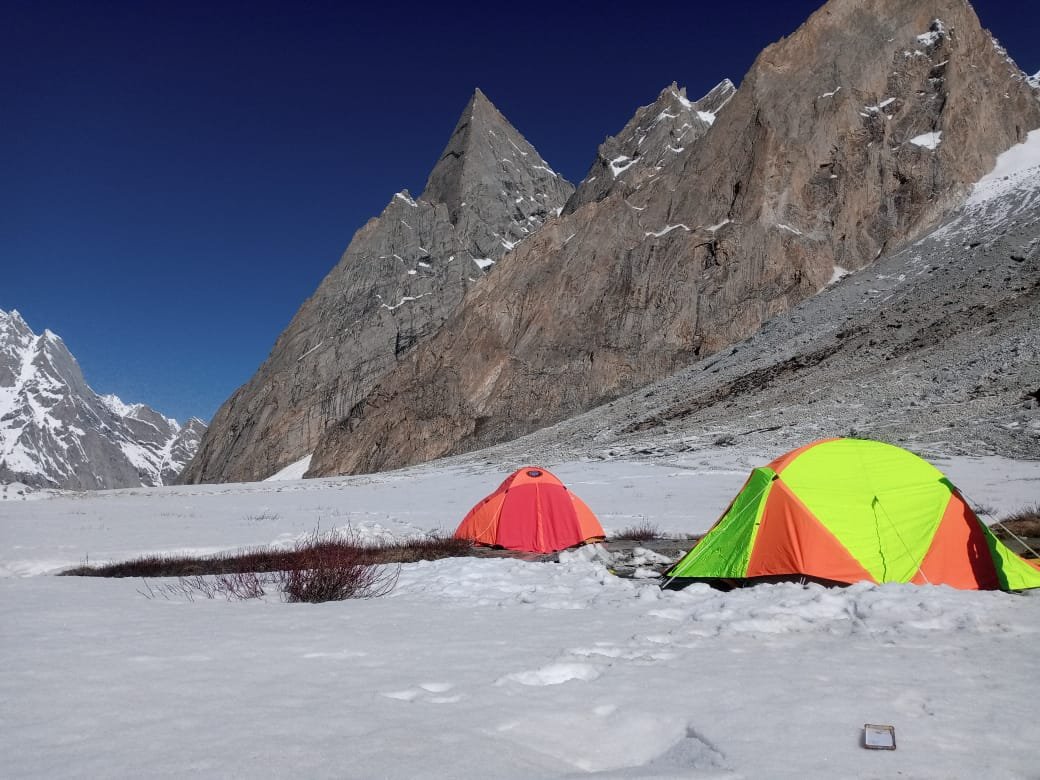
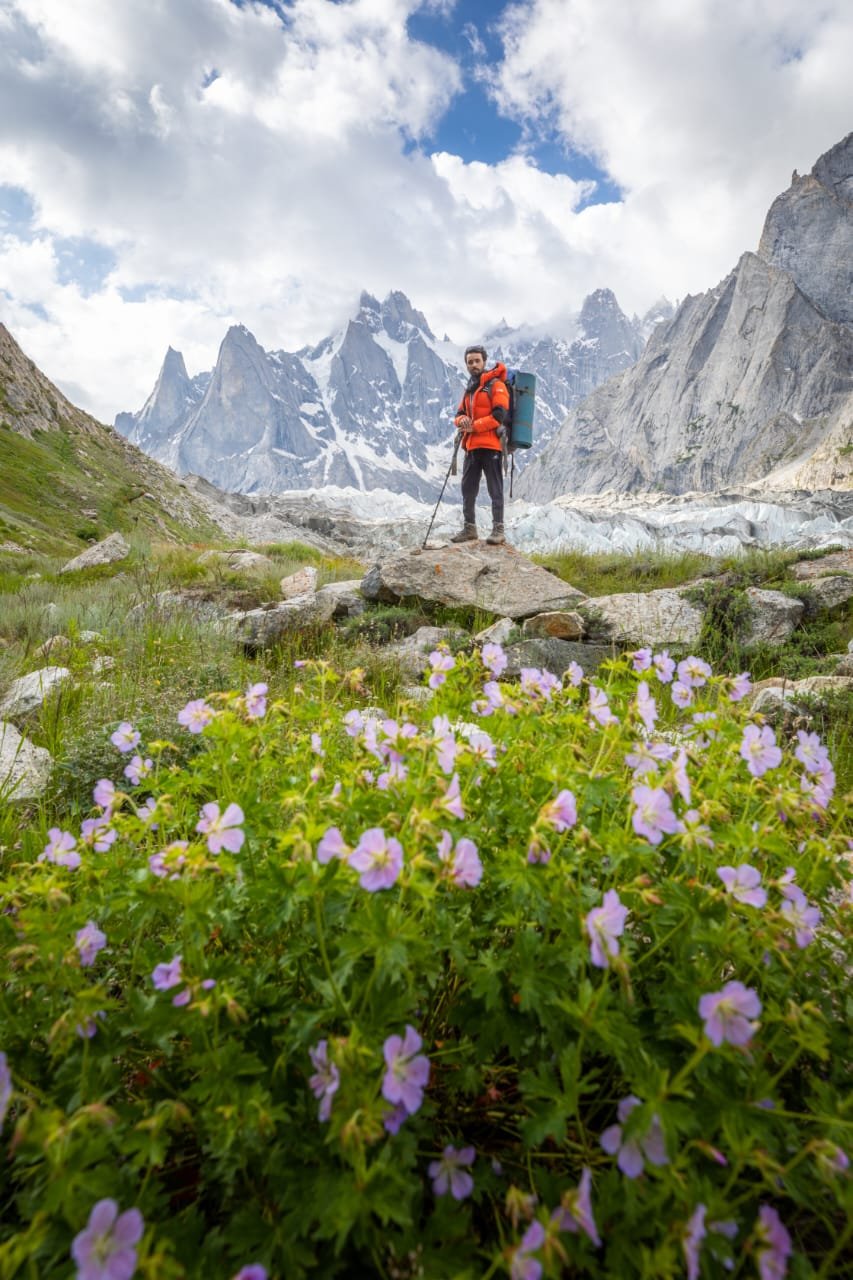
Branching east from the Saicho junction deep within the Vallée de HusheClick to open side panel for more information, the CharakusaClick to open side panel for more information Valley Trek is widely regarded as the premier big-wall granite wilderness in the Karakoram range. Flanked by vertical rock faces and towering summits including K7 (6,934m), K6 (7,281m), and Link Sar (7,041m), this alpine amphitheater attracts world-class big-wall climbers and high-altitude trekkers seeking raw, uncrowded mountain scenery.
Unlike long glacier expeditions, the route up the Charakusa Glacier allows trekkers to reach base camps surrounded by giant granite spires without technical mountaineering equipment.
Key Trek Specs
⛰ 540m
Arrive at Islamabad International Airport, meet our representative, and transfer to your hotel. Rest and prepare for travel to Baltistan.
🏠 Hotel in Islamabad
⛰ 2,230m | ⏱ 45 min flight (or 11–12 hrs drive)
Take a scenic flight over the Himalaya and Karakoram to Skardu (weather permitting). If canceled due to weather, begin the overland drive via the Karakoram Highway to Chilas.
🏠 Hotel in Skardu or Chilas
⛰ 2,230m | ⏱ 8–9 hours drive
If traveling overland from Chilas, complete the drive along the Indus River into Skardu. Otherwise, use this day to explore Katpana Cold Desert, Shangrila Lake, and local bazaars.
🏠 Hotel in Skardu
⛰ 3,050m | ⏱ 5–6 hours drive
Drive through the Shyok River Valley past historic Serena Khaplu Palace to Hushe Village, the final roadhead settlement in the valley. Meet local Balti porters and organize gear.
🏕 Camp / Guest House in Hushe Village
⛰ 3,330m | ⏱ 4–5 hours trek
Begin trekking along the Hushe River, ascending past riverbed pastures to reach Saicho, the junction camp where the Charakusa, Honboro, and Gondogoro valleys meet.
🏕 Camp at Saicho
⛰ 4,100m | ⏱ 5–6 hours trek
Turn east along the Charakusa Glacier moraine, climbing through lateral moraines and alpine terrain to establish camp at Spangser beneath massive granite walls.
🏕 Camp at Spangser
⛰ 4,300m | ⏱ 6–7 hours round-trip trek
Trek further up the Charakusa Glacier toward the base of K7 (6,934m), Link Sar (7,041m), and K6 (7,281m). Spend the day photographing sheer granite spires and alpine glaciers before returning to Spangser.
🏕 Camp at Spangser
⛰ 3,330m | ⏱ 4–5 hours trek
Descend back down along the lateral moraine of the Charakusa Glacier to the comfortable, forested junction camp at Saicho.
🏕 Camp at Saicho
⛰ 2,600m | ⏱ 3 hrs trek + 2 hrs drive
Trek down through Hushe Village, say goodbye to your porter team, and transfer by 4x4 vehicles to Khaplu to rest and visit the restored 18th-century palace and Chaqchan Mosque.
🏠 Hotel in Khaplu
⛰ 2,230m | ⏱ 3–4 hours drive
Drive back to Skardu along the Shyok River. Rest, enjoy hot showers, and gather for a celebratory dinner with the team.
🏠 Hotel in Skardu
⛰ 540m / 1,265m
Fly to Islamabad (weather permitting). If flights are grounded, begin the return drive along the Karakoram Highway to Chilas.
🏠 Hotel in Chilas or Islamabad
⛰ 540m
Complete the overland drive to Islamabad or enjoy a buffer day in the capital city for sightseeing and shopping.
🏠 Hotel in Islamabad
Transfer to Islamabad International Airport for onward flights home.
✈ Airport Transfer
Foot
- Walking/ hiking boots.
- Gaiters. A pair of knee high gaiters used to keep boots dry if walking through deep snow or on wet ground.
- Wool Socks and liner socks.
- Sandals (for use around camp and river crossings).
- Trainers or trail shoes. Can be used on arrival to camp.
Clothing
- Gore-Tex shell jacket and trousers. For use if it rains or snows during the trek.
- Light trekking trousers. Minimum two pairs of trousers.
- Long sleeve, light colored polypropylene shirts. Minimum two shirts.
- Microfleece.
- Mid to heavyweight fleece jacket (Polartec 200 to 300).
- Sleeveless/ gilet or body warmer type fleece. This will help keep your core warm while not bulking when layering up. Gilet fleece can be used in combination with base layers, other fleeces and down jacket to provide maximum warmth and insulation.
- Lightweight synthetic long underwear for both top & bottom.
- Light to mid weight fleece pants (Polartec 100 to 200).
- Medium weight down jacket (recommended
Hand Wear
- Fleece gloves.
- Warms mittens and/or gloves
Head Wear
- Warm wool or fleecy hat/balaclava.
- Sun hat or baseball cap.
- Bandana or scarf. Very useful for the often dusty jeep rides and for protection on hot days
- Light weight climber’s headlamp for use at night around the camp. Bring extra batteries and spare bulbs.
- High quality sunglasses with 100% UV protection. Most effective for blocking sunlight are the wrap around type or side covers
Personal Equipment
- 4 season sleeping bag (maximum overnight low -15C).
- Fleece or silk liner for your sleeping bag. A liner protects your sleeping bag from getting dirty and helps by adding extra insulation to keep you warm at night.
- Thermosets self-inflating pad and/or foam mat.
- Backpack. Recommended size is 50 liters or larger as you need to have enough space to carry water bottles, camera, lunch and extra clothing as well down jacket for days on the glacier. It is also a good idea to bring a pack cover to keep the contents dry.
- Stuff sacks for keeping your gear dry and organized. Or even better are fold dry bags such as from Expend.
- Two 1 liter water bottles (Nalgene wide mouth bottles are the best) and Camelback type water carrier 2 liter capacity. ·
Pee bottle. Highly recommended as means you do not have to get up to find toilet tent at night! For men you can use an old water bottle for women take a look at She Wee at http://www.shewee.com/ · Sunscreen and lip salve with an SPF 30 or better.
- Insect repellent.
- Water purification tablets (Pristine, Biox Acqua or Acqa Mira). You will be provided with boiled water at camp however if you refill water bottle at a water tap or steam during the day you should use water purifiers.
- Hand sanitizer. We suggest you keep this in your day pack for use after a toilet break during the trek or before eating any snacks.
- Favorite snack food.
- Paperback books, iPod and cards.
- Trekking poles (Black Diamond with “Flick Lock” are best). Having two poles is mandatory as required for your safety on steep and loose sections of the trail and for walking through deep snow higher up.
- Umbrella. You are likely to get some rain on this trek and also useful for providing shade when hot. · Camera with spare batteries and memory cards.
- Insurance certificate
- Baby wipes (optional)
Affiliated with & Licence