Minglik Sar Expedition
Shimshal Valley / Pamir-Karakoram — 6,050m
Minglik Sar (6,050m) is a high peak situated at the head of the Shimshal Pamir in the Hunza District of Gilgit-Baltistan. Soaring above the vast alpine pastures of Shimshal and the turquoise lakes of the Pamir pass, Minglik Sar provides a non-technical route into high-altitude mountaineering within one of the Karakoram’s most culturally distinct mountain regions.
Positioned near the borderlands of the Pamir plateau, Minglik Sar is widely considered an ideal entry-level 6,000-meter objective. What we offer is full logistics support — Islamabad-to-Base-Camp travel, permits, local Shimshali porters, kitchen staff, and full Base Camp infrastructure — for mountaineers seeking an authentic trekking and climbing experience in the Karakoram.
The Shimshal-Pamir Massif
Minglik Sar (6,050m) | Malungutti Sar (7,075m) | Yazghil Sar (6,000m) | Distaghil Sar (7,885m)
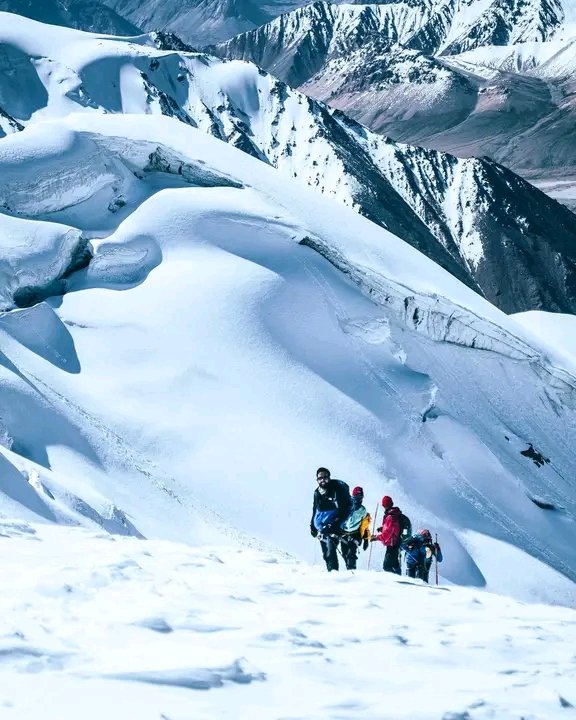
Route & Climbing History: Minglik Sar was first climbed in 1988 by a team led by famous Pakistani mountaineer Nazir Sabir along with local Shimshali climbers. The peak’s broad Southern Ridge offers a gradual snow slope ascent, making it a favorite for high-altitude trekkers stepping into mountaineering for the first time.
Climbing grade: Introductory high-altitude snow climb (PD-) — non-technical 30° to 35° snow slopes, glacier crossing, and gentle ridge walking. Requires basic crampon/ice axe skills, roped glacier travel, and strong cardiovascular fitness.
Climbing Equipment and Gear List
Mountain climbing Gears
❏ Helmet ( Black diamond, Petzel )
❏ Alpine Ice Axe (65-70cm)
❏ A mountaineering harness, with adjustable leg loops.
❏ Carabiners: 3 locking and 6 regular
❏ Rappel device: ATC or figure 8
Mountaineering boots
❏ Mountaineering boots suitable for above 6000m; La Sportiva Gsm2 or equivalent
❏ Hiking shoes for the trek to base camp with ankle protection
❏ Gaiters
❏ Thermal mountaineering socks or equivalent: 6 pairs
❏ Liner socks or equivalent: 3 pairs
Body Layers:
❏ 2 merino base layers: top / bottom set
❏ 1 mid layer top: breathable Underwear
❏ Lightweight Nylon Pants: 1 pair
❏ Hooded Soft Shell jacket To be worn over other layers
❏ Soft Shell Guide Pants: Gore Tex and breathable
❏ Hooded Hard Shell: Gore Tex and breathable
❏ Hard Shell Pants: Gore Tex and breathable, big enough to wear over your guide trousers
❏ Insulated Down Jacket with hood: North Face Himalayan parka or equivalent
❏ Insulated synthetic Pants: Worn primarily when climbing below Camp 2
❏ Long jones equivalent to Rab’s Polartec or equivalent: 2 pairs
Headgear and Hand wear:
❏ Wool hat (ski hat)
❏ Sunhat: To shade your face / neck from the sun on a hot day
❏ Buff: To protect your neck / face from the sun
❏ Under helmet Balaclava
❏ Glacier glasses: Full protection with side covers or wrap around
❏ Ski goggles: To be worn on summit day in the event of high winds
❏ Lightweight synthetic liner gloves: For wearing on a hot day; 2 pairs
❏ Soft shell gloves: To wear for moderate cold / wind
❏ Shell glove with insulated liner: To wear for severe cold / strong wind
❏ Expedition Mitts for bad weather
Personal Gear:
❏ Expedition Backpack: 65L pack should be large enough.
❏ Trekking Backpack: To carry on the trek to base camp. Simple and light.
❏ Sleeping Bag: Rated to at least -40°F. Goose down or synthetic
❏ Compression stuff sacks: 3 large ones; for reducing volume of the sleeping bag, down parka, etc., in your pack.
❏ High Quality sleeping pad (1 for base camp and 1 for high camps): Full length is preferred.
❏ Closed cell foam pad: To be used in conjunction with the inflating pad for warmth and comfort when sleeping.
❏ Trekking poles with snow baskets: Adjustable poles
❏ Cup: Plastic insulated cup for drinking
❏ Bowl: A plastic bowl for eating dinner or breakfast
❏ Spoon: Plastic spoon
❏ Head torch: 1 normal for base camp and 1 with remote battery systems for climbing at night. This will be used whilst climbing at night
❏ Sunscreen: SPF 50 or above
❏ Lip balm with sunblock
❏ Water bottles: 2 wide mouth bottles with 1 liter capacity
❏ Water bottle parkas (2): fully insulated with zip opening
❏ Thermos: 1 litre (buy a good ones to keep your water warm for longer hours)
❏ Pee bottle: 1 litre minimum bottle for convenience at night in the tent
❏ Toiletry bag: Include toilet paper and hand sanitizer and small towel
❏ Hand warmers & toe warmers
❏ Pen Knife or multi tool (optional)
❏ Camera: bring extra batteries and memory cards
❏ Personal solar charging system (optional but recommended)
❏ Travel Clothes
❏ Duffel bags (2) with locks: To transport equipment
❏ Base Camp extra Items: Kindle, I pad, books, smart phone, etc
❏ Snack food: Please bring a few days of your favourite climbing snack food such as bars, energy gels, nuts, beef jerky, etc. A variety of salty and sweet is recommended to give you extra energy.
❏ Small personal first aid kit: Include athletic tape, Band-Aid’s, Ibuprofen, blister care, personal medications, etc
❏ Medications and Prescriptions: Bring antibiotics (Azithromycin, etc.), and altitude medicine such as Diamox and dexamethasone
Arrive in Islamabad & Expedition Briefing
⛰ 540m
Our team will receive you at Islamabad International Airport with a name placard and transfer you to your hotel. Share flight details .
🏠 Grand Islamabad / Envoy Hotel or equivalent
Fly Islamabad → Gilgit (or Drive via KKH)
⛰ 1,500m | ⏱ 45 min flight (or 10–12 hrs drive)
Scenic morning flight over the Karakoram to Gilgit. (If weather delays the flight, travel overland via the Karakoram Highway to Chilas/Gilgit). Drive to Passu or Gulmit in Upper Hunza.
🏠 Marco Polo Inn / Gulmit Continental or equivalent, Upper Hunza
Drive Hunza → Shimshal Village
⛰ 3,100m | ⏱ 3–4 hours drive
Jeep drive through the narrow, dramatic Shimshal Gorge to Shimshal Village, home to famous Pakistani high-altitude climbers.
🏠 Local Guest House / Camp, Shimshal
Trek Shimshal Village → Past Furzin
⛰ 3,500m | 📍 15 km | ⏱ 6–7 hours
Begin trekking along the Shimshal River, crossing suspension bridges and narrow gorges to reach the campsite at Past Furzin.
🏕 Camp — twin-sharing dome tent
Trek Past Furzin → Arbab Purien
⛰ 3,900m | 📍 12 km | ⏱ 5–6 hours
Ascend gradually alongside riverbeds and scree slopes toward Arbab Purien, taking in views of surrounding granite spires.
🏕 Camp — twin-sharing dome tent
Trek Arbab Purien → Shimshal Pass (Base Camp)
⛰ 4,735m | 📍 10 km | ⏱ 4–5 hours
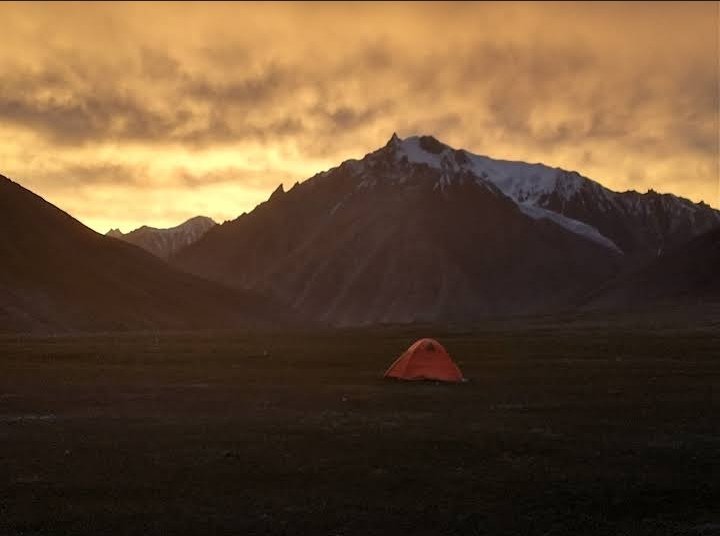
Trek up to the high alpine pastures of Shimshal Pass (4,735m) near the twin lakes. Establish Base Camp directly beneath Minglik Sar.
🏕 Minglik Sar Base Camp / Shimshal Pass (4,735m)
Climbing Period — Acclimatization, High Camp & Summit Push
⛰ 4,735m – 6,050m | ⏱ 5 days
Begins with camp setup and safety briefings. The team conducts acclimatization hikes around the Pamir lakes, sets up High Camp at ~5,300m, and monitors wind and snow conditions. During an early morning start, climbers traverse the 30°–35° snow slope to reach the 6,050m summit of Minglik Sar before descending back to Base Camp.
⛺ Base Camp / High Camp
Base Camp Pack-Up & Trek to Past Furzin
⛰ 3,500m | ⏱ 6–7 hours
Disassemble camps according to leave-no-trace protocols. Trek down from Shimshal Pass to Past Furzin.
🏕 Camp at Past Furzin
Trek Past Furzin → Shimshal Village
⛰ 3,100m | ⏱ 5–6 hours
Complete the return trek to Shimshal Village. Celebrate with local Shimshali porters and mountain guides.
🏠 Local Guest House / Camp, Shimshal
Drive Shimshal → Passu / Karimabad (Hunza)
⛰ 2,400m | ⏱ 3–4 hours drive
Drive back through the Shimshal Gorge to the Karakoram Highway and proceed to Karimabad.
🏠 Hotel in Karimabad / Passu
Drive Hunza → Gilgit / Chilas
⛰ 1,500m | ⏱ 5–6 hours drive
Drive south along the Karakoram Highway to Gilgit or Chilas.
🏠 Hotel stay
Fly / Drive Gilgit → Islamabad
⛰ 540m | ⏱ 45 min flight (or 10–12 hrs drive)
Morning flight to Islamabad (or overland drive via KKH/Babusar Pass).
🏠 Grand Islamabad / Envoy Hotel or equivalent
International Departure
⏱ Breakfast included
Transfer to Islamabad International Airport for homebound flights.
✈ Departure — transfer to airport
Affiliated with & Licence