Golden Peak — Southwest Ridge — 7,027m
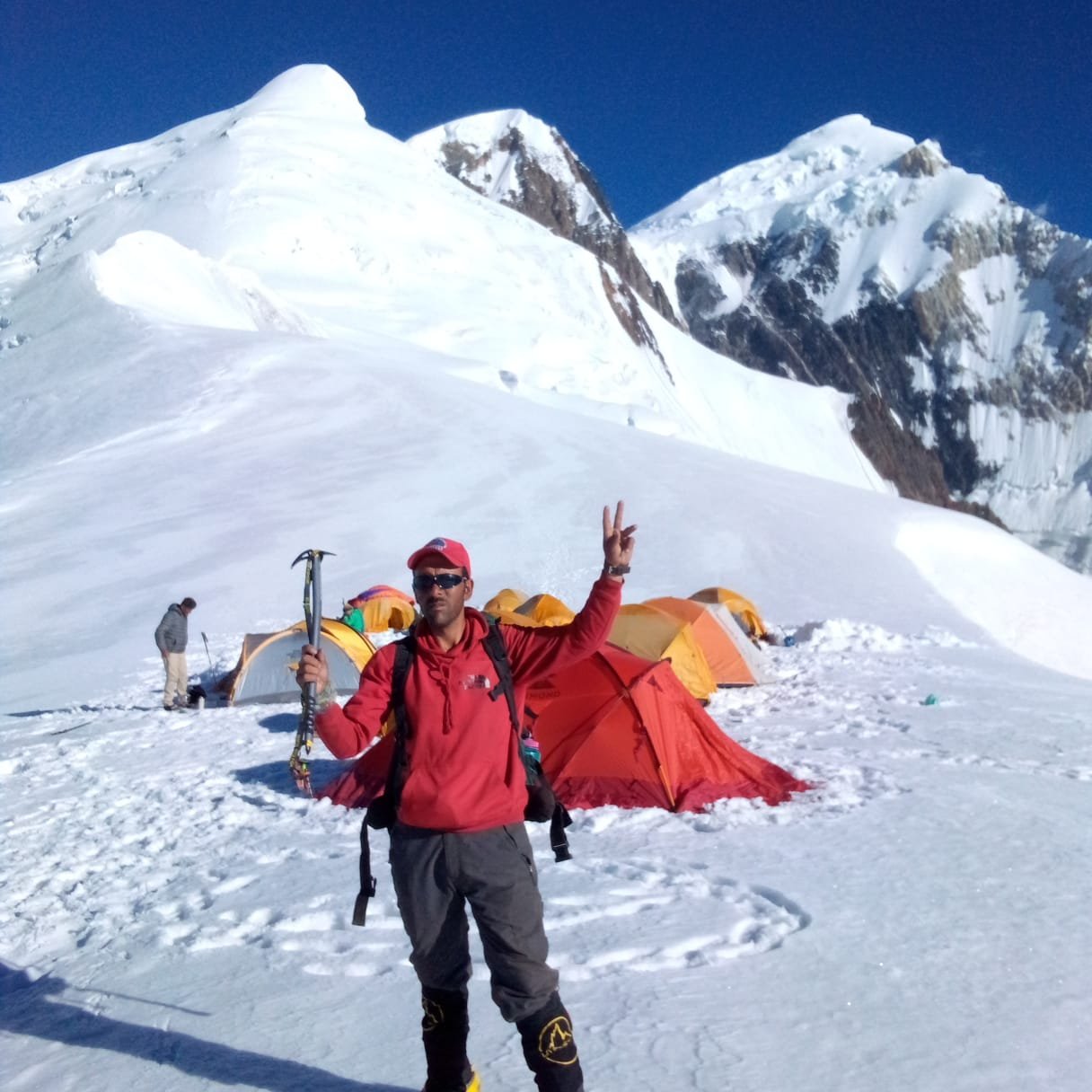
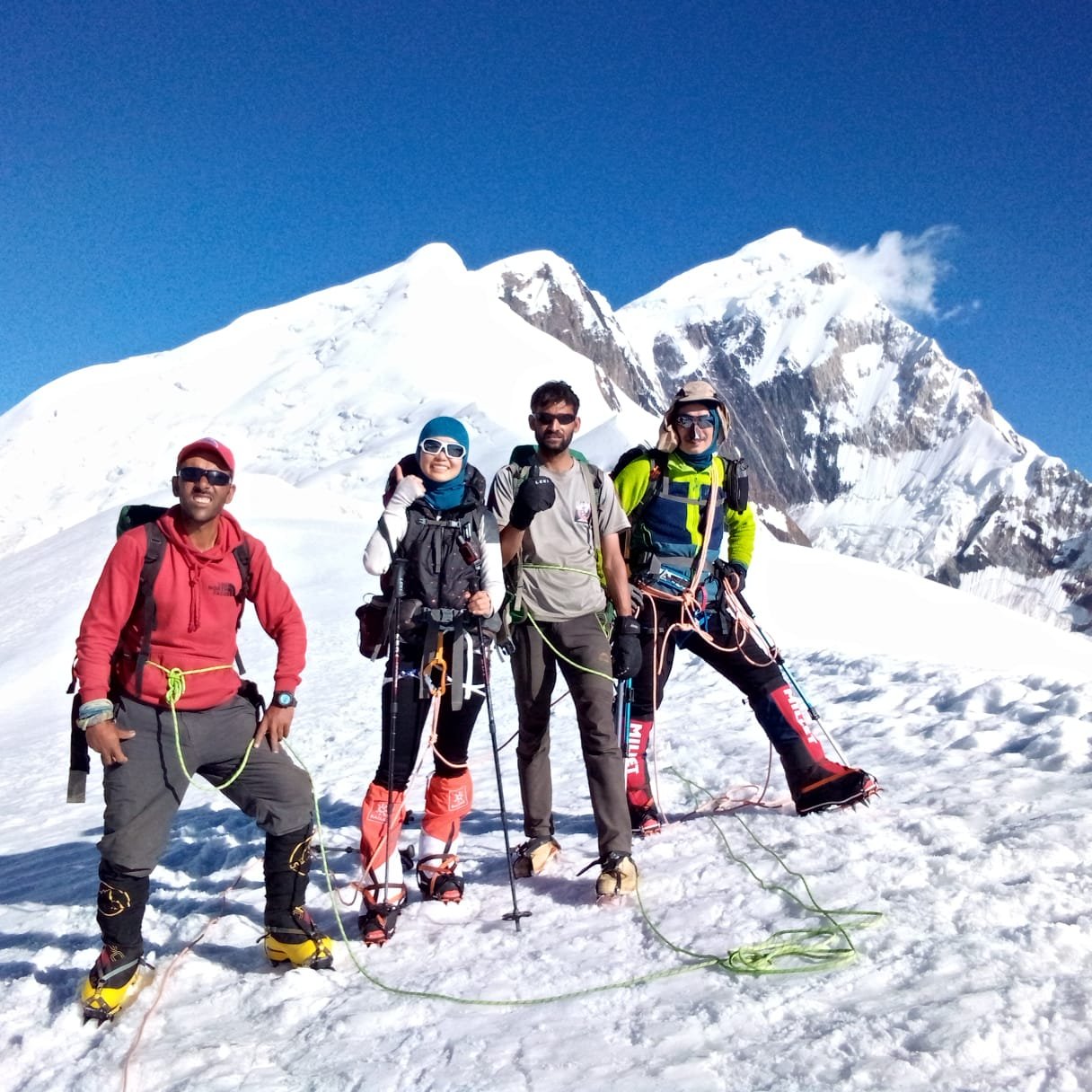
Spantik (7,027m), also known as Golden Peak, is one of the most accessible and popular 7,000-meter summits in the Karakoram range. Situated in the Gilgit-Baltistan region of Pakistan, Spantik stands between the Nagar Valley and the Arandu Valley, offering breathtaking views of the surrounding peaks, including Rakaposhi, Diran, and the distant Karakoram giants.
Unlike the highly technical walls of Masherbrum or Rakaposhi’s Northwest Ridge, Spantik’s Southwest Ridge (the “Normal Route”) presents a classic, non-technical high-altitude snow climb. What we offer is comprehensive logistics support — Islamabad-to-Base-Camp travel, permits, porters, kitchen staff, and Base Camp infrastructure — for mountaineers seeking an ideal gateway peak to 7,000m and 8,000m high-altitude climbing.
The Spantik Massif
Spantik / Golden Peak (7,027m)
Route & Climbing History: Spantik was first scouted by William Hunter Workman and Fanny Bullock Workman in 1906, who named it “Golden Peak” after the golden hues of its South Face at sunset. The mountain was first successfully summitted in 1955 by a German expedition led by Karl Kramer via the Southwest Ridge. Today, the Southwest Ridge remains the standard route, valued for its gradual snow slopes and minimal technical rock exposure.
Climbing grade: Moderate snow/ice climbing (PD+ / AD) — sustained snow ridges up to 35°–45° with straightforward glacier navigation. It serves as an exceptional training ground for aspiring 8,000-meter climbers and high-altitude alpinists.
Climbing Equipment and Gear List
Mountain climbing Gears
❏ Helmet ( Black diamond, Petzel )
❏ Alpine Ice Axe (65-70cm)
❏ A mountaineering harness, with adjustable leg loops.
❏ Carabiners: 3 locking and 6 regular
❏ Rappel device: ATC or figure 8
Mountaineering boots
❏ Mountaineering boots suitable for above 6000m; La Sportiva Gsm2 or equivalent
❏ Hiking shoes for the trek to base camp with ankle protection
❏ Gaiters
❏ Thermal mountaineering socks or equivalent: 6 pairs
❏ Liner socks or equivalent: 3 pairs
Body Layers:
❏ 2 merino base layers: top / bottom set
❏ 1 mid layer top: breathable Underwear
❏ Lightweight Nylon Pants: 1 pair
❏ Hooded Soft Shell jacket To be worn over other layers
❏ Soft Shell Guide Pants: Gore Tex and breathable
❏ Hooded Hard Shell: Gore Tex and breathable
❏ Hard Shell Pants: Gore Tex and breathable, big enough to wear over your guide trousers
❏ Insulated Down Jacket with hood: North Face Himalayan parka or equivalent
❏ Insulated synthetic Pants: Worn primarily when climbing below Camp 2
❏ Long jones equivalent to Rab’s Polartec or equivalent: 2 pairs
Headgear and Hand wear:
❏ Wool hat (ski hat)
❏ Sunhat: To shade your face / neck from the sun on a hot day
❏ Buff: To protect your neck / face from the sun
❏ Under helmet Balaclava
❏ Glacier glasses: Full protection with side covers or wrap around
❏ Ski goggles: To be worn on summit day in the event of high winds
❏ Lightweight synthetic liner gloves: For wearing on a hot day; 2 pairs
❏ Soft shell gloves: To wear for moderate cold / wind
❏ Shell glove with insulated liner: To wear for severe cold / strong wind
❏ Expedition Mitts for bad weather
Personal Gear:
❏ Expedition Backpack: 65L pack should be large enough.
❏ Trekking Backpack: To carry on the trek to base camp. Simple and light.
❏ Sleeping Bag: Rated to at least -40°F. Goose down or synthetic
❏ Compression stuff sacks: 3 large ones; for reducing volume of the sleeping bag, down parka, etc., in your pack.
❏ High Quality sleeping pad (1 for base camp and 1 for high camps): Full length is preferred.
❏ Closed cell foam pad: To be used in conjunction with the inflating pad for warmth and comfort when sleeping.
❏ Trekking poles with snow baskets: Adjustable poles
❏ Cup: Plastic insulated cup for drinking
❏ Bowl: A plastic bowl for eating dinner or breakfast
❏ Spoon: Plastic spoon
❏ Head torch: 1 normal for base camp and 1 with remote battery systems for climbing at night. This will be used whilst climbing at night
❏ Sunscreen: SPF 50 or above
❏ Lip balm with sunblock
❏ Water bottles: 2 wide mouth bottles with 1 liter capacity
❏ Water bottle parkas (2): fully insulated with zip opening
❏ Thermos: 1 litre (buy a good ones to keep your water warm for longer hours)
❏ Pee bottle: 1 litre minimum bottle for convenience at night in the tent
❏ Toiletry bag: Include toilet paper and hand sanitizer and small towel
❏ Hand warmers & toe warmers
❏ Pen Knife or multi tool (optional)
❏ Camera: bring extra batteries and memory cards
❏ Personal solar charging system (optional but recommended)
❏ Travel Clothes
❏ Duffel bags (2) with locks: To transport equipment
❏ Base Camp extra Items: Kindle, I pad, books, smart phone, etc
❏ Snack food: Please bring a few days of your favourite climbing snack food such as bars, energy gels, nuts, beef jerky, etc. A variety of salty and sweet is recommended to give you extra energy.
❏ Small personal first aid kit: Include athletic tape, Band-Aid’s, Ibuprofen, blister care, personal medications, etc
❏ Medications and Prescriptions: Bring antibiotics (Azithromycin, etc.), and altitude medicine such as Diamox and dexamethasone
DAY 01 | Arrive in Islamabad & Expedition Briefing
⛰ 540m
Our team will receive you at Islamabad International Airport with a name placard and transfer you to your hotel. Share flight details and any other information you may need.
🏠 Grand Islamabad / Envoy Hotel or equivalent
DAY 02 | Fly Islamabad → Skardu (or Drive via KKH)
⛰ 2,498m | ⏱ 45 min flight (or 10–12 hrs drive)
Scenic morning flight over the Karakoram to Skardu. (If weather delays the flight, the group travels overland via the Karakoram Highway to Chilas/Skardu).
🏠 Relax Inn or equivalent, Skardu
Skardu — Final Preparations & Sightseeing
⛰ 2,498m | ⏱ Rest / Preparation day
Final equipment and food packing for the trek. Staff complete porter arrangements and government clearance.
🏠 Relax Inn or equivalent, Skardu
Drive Skardu → Arandu Village (Shigar Valley)
⛰ 2,750m | ⏱ 6–7 hours drive
Jeep safari through the scenic Shigar Valley to Arandu, the last inhabited village at the foot of the Chogo Lugma Glacier.
🏕 Camp / Local Lodge, Arandu
Trek Arandu → Mancho Koro
⛰ 3,300m | 📍 12 km | ⏱ 5–6 hours
Begin trekking along the lateral moraine of the Chogo Lugma Glacier, surrounded by dramatic rock spires, to camp at Mancho Koro.
🏕 Camp — twin-sharing dome tent
Trek Mancho Koro → Spantik Base Camp
⛰ 4,300m | 📍 10 km | ⏱ 4–5 hours
Continue trekking up the glacier to establish Spantik Base Camp (4,300m) on a grassy lateral moraine near the base of the Southwest Ridge. Kitchen staff and crew establish full Base Camp setup.
🏕 Spantik Base Camp (4,300m)
Climbing Period — Acclimatization, Rotations & Summit Push
⛰ 4,300m – 7,027m | ⏱ 18 days
This period begins with a traditional puja ceremony and Base Camp setup. Climbers carry loads, establish high camps along the broad Southwest Ridge, and acclimatize up to Camp 3 (~6,200m). When a clear weather window opens, the team commits to the summit push via the snow ridge to reach the 7,027m summit. The phase concludes with camp disassembly and recovery at Base Camp.
⛺ Spantik Base Camp / High Camps
Base Camp Pack-Up & Trek to Mancho Koro
⛰ 3,300m | ⏱ 4–5 hours
Pack down high camps and Base Camp according to leave-no-trace protocols. Trek back down the glacier to Mancho Koro.
🏕 Camp at Mancho Koro
Trek Mancho Koro → Arandu Village
⛰ 2,750m | ⏱ 4–5 hours
Complete the return trek to Arandu village. Celebrate with local porters and trekking staff.
🏠 Local Guest House / Camp, Arandu
DAY 27 | Drive Arandu → Skardu
⛰ 2,498m | ⏱ 6–7 hours drive
Drive back through the Shigar Valley to Skardu. Enjoy hot showers and hotel rest.
🏠 Relax Inn or equivalent, Skardu
DAY 28 | Fly Skardu → Islamabad (Contingency Drive)
⛰ 540m | ⏱ 45 min flight
Morning flight to Islamabad. If flights are cancelled due to weather, travel by road via KKH.
🏠 Grand Islamabad / Envoy Hotel or equivalent
De-briefing & International Departure
⏱ Breakfast included
Official de-briefing with the Alpine Club of Pakistan / Ministry of Tourism. Transfer to Islamabad International Airport for your flight home.
✈ Departure — transfer to airport
Affiliated with & Licence