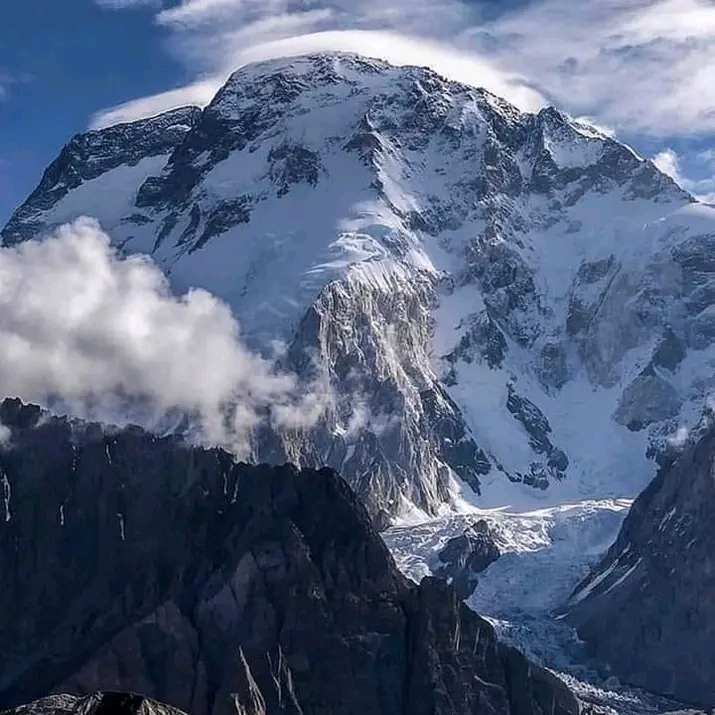
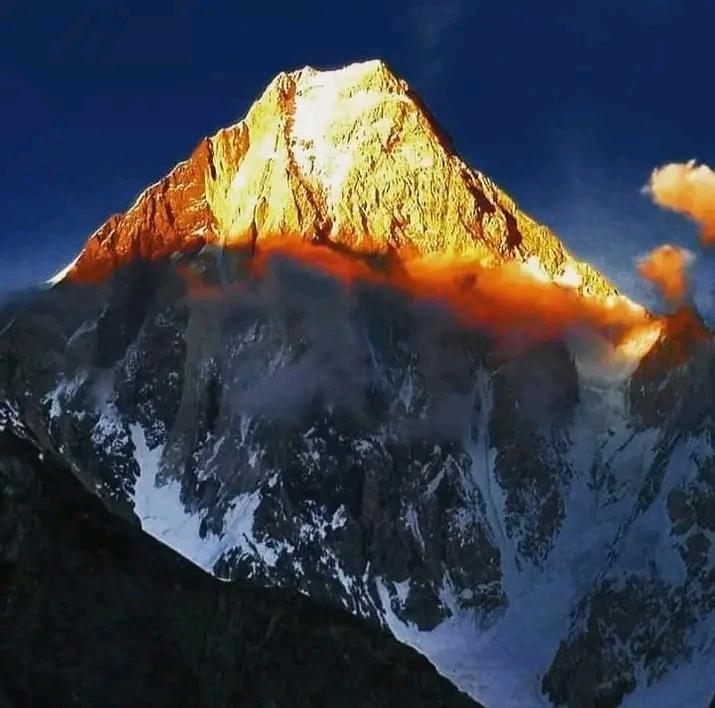
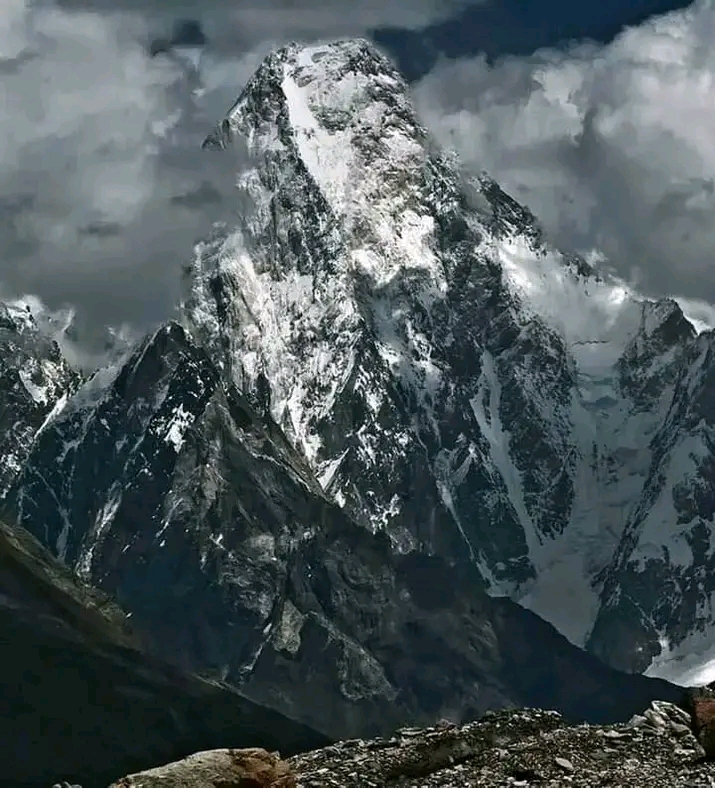
Amin Brak (5,895 m / 19,340 ft) stands as the premier big-wall rock climbing objective of the Nangma valley — a massive, near-vertical granite tower that rises from the valley floor in a succession of crack systems, faces, dihedrals, and roofs that have drawn the finest technical rock climbers in the world since the valley was first explored by climbing expeditions in the late 1980s. Located in the Nangma valley of the Kanday Karakoram, Ghanche district, Baltistan, Gilgit-Baltistan, the tower shares its valley with the equally celebrated Naisa Brak, with Drifika Peak and Kapura Peak forming the glaciated alpine objectives of the same cirque, and with the Charakusa valley’s K7 and K6 group accessible on the far side of the ridge. Amin Brak is fundamentally unlike every other peak in this guide series: it is not an alpinism objective where crampons, ice axes, and high-altitude snow travel dominate the technical demands. It is a granite big-wall climbing objective — a mountain whose character, equipment requirements, tactical planning, and technical disciplines place it closer to El Capitan in Yosemite, the Tre Cime in the Dolomites, or the towers of Patagonia than to the snow-and-ice Karakoram giants that form the backdrop of its approach valley.
The wall’s scale is extraordinary: from the Base Camp meadow (approximately 3,900 m) to the summit (5,895 m), the vertical relief is approximately 2,000 metres — comparable to El Capitan’s 900-metre face but at Himalayan altitude and in a Karakoram weather environment. The crack systems that score Amin Brak’s granite face run from fingertip-width seams through hand and fist cracks to wide off-width and chimney sections, providing a full spectrum of free and aid climbing challenges across the various established and potential route lines. The altitude adds a dimension absent from lower-altitude big walls: above 5,000 m, the physical effort of each pitch — hauling a body weight up a fixed line, mantling onto a marginal aid placement, stemming across a roof — is amplified by the reduced oxygen that thin Karakoram air delivers to working muscles. Teams accustomed to big walls at sea level consistently report that the combination of sustained technical rock climbing and altitude produces a level of physical depletion at the end of each wall day that is categorically more demanding than either challenge in isolation. A 20-day wall ascent at altitude on Amin Brak — with the full logistical management of portaledge camps, haul systems, and a finite food and water supply — represents one of the most complete and demanding mountaineering challenges available in the Karakoram today.
The Nangma valley provides an exceptional Base Camp environment for the weeks of approach, reconnaissance, and recovery that surround the wall ascent. The valley’s grassy meadow BC at 3,900 m — shared with Drifika and Kapura expeditions — provides comfortable rest and recovery terrain between wall excursions, and the surrounding peaks offer acclimatization objectives that help the team adjust to altitude before committing to the sustained physical demands of the wall above. The 3-day approach from Skardu to BC via Kanday and Mingulo Broq is among the shorter approaches to a major Karakoram objective, and the valley’s increasing reputation as a world-class destination for both rock and alpine climbing has resulted in a steady improvement in the local logistical infrastructure over successive expedition seasons. For teams ready for Amin Brak’s specific demands — big-wall experience, aid climbing competence, portaledge management, and high-altitude fitness — the tower represents a mountaineering objective of the highest quality: a sustained, aesthetic, and historically rich granite wall at the heart of one of the most beautiful valleys in Pakistan.
Equipment & Gear List
The following equipment lists are specifically configured for a big-wall granite rock climbing expedition on Amin Brak. This gear specification is fundamentally different from the snow and ice equipment lists of the other peaks in this guide series. No crampons, ice axes, or mountaineering boots appear here — the dominant disciplines are crack climbing, aid climbing, haul system management, and portaledge camping. Personal and team gear weights must be carefully managed; haul bag loads should not exceed 25 kg per bag.
3.1 Personal Climbing Equipment & Clothing
| ITEM | QTY | NOTES |
| Rock Shoes (high-performance) | 2 pairs | Primary pair for free climbing; second pair for backup and rest steps; La Sportiva or Scarpa recommended |
| Approach / Descent Shoes | 1 pair | For Base Camp, approach trek, and rappel descents; stiff-soled approach shoe preferred |
| Climbing Harness (wall harness) | 1 | Big-wall harness with gear loops and comfort padding for extended hanging belays; Petzl Sequoia or Black Diamond Forge recommended |
| Helmet (CE/UIAA certified) | 1 | MANDATORY — rockfall from above on a big wall is constant; MIPS protection preferred; Petzl Sirocco or Black Diamond Vision |
| Belay / Rappel Device (assisted braking) | 1 | Petzl Grigri or Trango Cinch for wall belaying; back up with a tube device for rappels |
| Tube-Style Belay Device | 1 | ATC-style for rappels and simul-climbing belays; Petzl Reverso or Black Diamond ATC-Guide |
| Ascenders / Jumars (pair) | 1 pair | Petzl Basic or CMC; essential for jugging fixed lines on the lower wall and retreat |
| Locking Carabiners (assorted) | 10–14 | Mix of D-shape (HMS), oval (for aiders and haul), and lightweight screwgate; ample supply for a big wall |
| Non-locking Carabiners | 20–25 | High-quantity requirement for racking cams, nuts, and pitons on big-wall pitches |
| Daisy Chains (2 per climber) | 2 | Metolius or Black Diamond; for aiders and wall positioning — essential aid climbing equipment |
| Aiders / Etriers (2 per climber) | 2 sets | Nylon or Dyneema; 5-step preferred for Amin Brak’s varied crack systems |
| Fifi Hook | 2 | For quick clip-in to protection on aid pitches; essential wall hardware |
| Chest Harness (wall use) | 1 | For ascender attachment when jugging fixed lines; Petzl or Black Diamond chest harness |
| Knee Pads | 1 pair | Optional but recommended for crack climbing and stemming on Amin Brak’s granite |
| Chalk Bag & Chalk | Full supply | Essential for free climbing sections; extra chalk for humid conditions |
| Fingerless Gloves / Crack Gloves | 1–2 pairs | Hand protection on wide-crack and haul rope sections; Black Diamond crack gloves recommended |
| Headlamp + Spare Batteries (lithium) | 2 | Climbing in pre-dawn and post-dusk light is standard on big-wall pushes; Black Diamond Spot or Petzl Tikka |
| Sunglasses (Category 3) | 2 pairs | Wall climbing under direct sun and glacier UV reflection from below; spare essential |
| Sun Hat & Warm Hat | 1 each | Wide-brim for daytime wall exposure; beanie for cold portaledge bivouacs and summit tower |
| Insulated Jacket (light down / synthetic) | 1 | For belaying and portaledge nights; not a full expedition suit — Patagonia Micro Puff or similar |
| Wind / Shell Jacket & Pants | 1 set | Waterproof/windproof layer for wall bivouac storms and summit tower conditions |
| Base Layers (thermal) | 2–3 sets | Moisture-wicking for active climbing; insulating for rest on the wall |
| Approach Pants / Climbing Pants | 2 | Durable, articulated; sufficient for Amin Brak’s granite crack climbing without excessive bulk |
3.2 Protection Rack — Rock Hardware
The following rack specification covers the full range of protection required for a serious big-wall route on Amin Brak’s granite. Quantities listed are per team of two climbers. Adjust rack composition based on the specific chosen route’s crack character after BC reconnaissance.
| ITEM | QTY / SPEC | NOTES |
| Cams — Small (0.1 to 0.5 inch / BD C3 / Metolius Master Cam) | 3–4 of each size | Amin Brak’s thin seams and fingertip cracks require high-quality microcam protection |
| Cams — Medium (0.5 to 2 inch / BD C4) | 3–4 of each size | The workhorses of the rack for hand and fist cracks across the main Amin Brak crack systems |
| Cams — Large (2 to 4 inch / BD C4 / Metolius) | 2–3 of each size | Off-width and wide sections on the approach pitches and upper crack systems |
| Cams — Extra Large (4 to 6 inch / BD Big Bro / Totem) | 1–2 | Wide crack and chimney sections on specific pitch systems; team shared |
| Nuts — Full Set (Wired, sizes 1–13) | 2 full sets | BD Stopper or DMM Wallnut; double set essential for route-length nut placements on a wall route |
| Offset Nuts / Micronuts (small set) | 1 set | DMM Torque nuts or similar; thin crack protection where standard nuts bottom out on Amin Brak’s granite |
| Hexentrics (sizes 4–10) | 1 set | Passive protection for constricting cracks; supplement cams on parallel-sided sections |
| Ball Nuts / Totem Basics | 4–6 | Flared crack and unusual section protection; highly recommended for Amin Brak’s varied seam character |
| Pitons — Knifeblade (Bugaboos) | 6–10 | Thin seam aid on sections where cams and nuts fail; Black Diamond or Petzl Leeper; be prepared to clean and replace |
| Pitons — Lost Arrow | 6–8 | Medium crack aid sections and anchor building where cams are insufficient |
| Pitons — Angle Pitons (various) | 4–6 | Wide crack sections; essential for the full range of Amin Brak crack widths |
| Birdbeaks | 4–6 | Extremely thin seam and granite feature aid where all other protection is inadequate |
| Skyhooks | 4–6 | Hooking on granite edges and flakes; essential for sections between crack features |
| Copperheads (various sizes) | 6–8 | Aid on compressed seams where no other protection accepts; pounded into place with a hammer |
| Rurps | 3–4 | Realized Ultimate Reality Pitons — for the thinnest aid placements on Amin Brak’s blank seams |
| Hammer (wall) | 1 | Stubai or Petzl; for piton and copperhead placement; essential wall tool |
| Nut Tool | 2 (team) | For cleaning stuck nuts and pitons on multi-day wall routes |
| Slings (120 cm) / Runners | 10–12 | For extending protection and building anchors across varied terrain |
| Slings (60 cm) | 10–12 | Short runners for direct clipping and anchor equalization |
| Cordelette (7 mm, 6–8 m) | 2 (team) | Anchor equalization on stance and portaledge positions |
| Tag Line (6–7 mm, 60 m) | 1 | For hauling, fixing pitches, and as a second lead rope on certain sections |
3.3 Wall Systems — Ropes, Portaledge & Hauling
| ITEM | QTY / SPEC | NOTES |
| Lead Ropes (9.5–10 mm, 60 m) | 2 | Dry-treated; Mammut Infinity or Sterling Marathon — two full ropes for the wall route |
| Haul Rope (10–11 mm, 60–70 m) | 1 | Static or low-stretch; Beal Antipodes or Sterling HTP — dedicated haul line |
| Pulley System (3:1 or 6:1) | 1 | Petzl Micro Traxion + Petzl Pro Traxion for hauling; wall hauling is physically intensive on Amin Brak |
| Portaledge (2-person) | 1 | Black Diamond Cliff Cabana or Fish Products METOLIUS — rated for Karakoram storm conditions; fly essential |
| Haul Bags (large, 100–120 L) | 2 | Metolius or Black Diamond; one per climber pair for food, water, and technical gear |
| Haul Bag (small, 60 L) | 1 | Secondary haul for additional food and sleeping systems on a 20+ day wall ascent |
| Sleeping Bags (−10°C rated) | 2 | For portaledge nights; Amin Brak wall bivouacs can be cold in June–July; stuff sacks essential |
| Sleeping Pad (lightweight inflatable) | 2 | Therm-a-Rest NeoAir for portaledge sleeping; compact and lightweight for hauling |
| Wall Stove (canister, compact) | 1 | MSR PocketRocket or Jetboil Flash; space is at a premium on a portaledge — compact stove essential |
| Fuel Canisters (small, 100 g) | 12–16 | A 20-day wall ascent requires systematic fuel management; calculate ~1.5 canisters per meal-day |
| Water Containers (collapsible, 4 L each) | 3–4 | Water supply on a big Karakoram wall is entirely from hauled supply; careful water management is critical |
| Food Supply (wall rations) | 20–23 days | High-calorie, low-weight wall food: freeze-dried meals, nuts, energy bars, jerky, chocolate — ~3,500 kcal/person/day |
| Waste Bags (WAG bags) | Full supply | Leave No Trace compliance on Amin Brak is monitored; human waste must be packed out; WAG bag system mandatory |
| Poop Tube (PVC container) | 1 per climber | For hauling solid waste down the wall; sealed container with gasket lid |
3.4 Medical, Safety & Communication
| ITEM | QTY | NOTES |
| Pulse Oximeter | 2 (team) | Daily SpO2 monitoring; altitude effects relevant above BC and on the upper wall |
| Dexamethasone 8 mg injectable | Per protocol | HACE emergency — administer and begin immediate descent from the wall |
| Nifedipine 30 mg extended-release | Per protocol | HAPE emergency — administer and begin immediate descent |
| Diamox (Acetazolamide) 250 mg | Per protocol | Acclimatization support during approach and early wall phases |
| Ibuprofen & Paracetamol | Ample supply | Finger joint and tendon pain management — occupational hazard of crack climbing on long routes |
| Ibuprofen gel / Voltaren | Ample supply | Topical anti-inflammatory for finger and hand tendon inflammation from repeated crack climbing |
| Sports tape (1-inch rigid) | 10+ rolls | Finger taping is essential for protecting skin and tendons on crack climbing at this scale; budget generously |
| Skin repair (Climb On balm / New-Skin) | Full supply | Skin management on Amin Brak granite is critical — skin wear is severe on multi-day crack climbing |
| Wound closure strips & antiseptic | Per person | Rock lacerations, haul rope burns, and sharp edge cuts are routine on a big wall |
| SAT Phone | 1 | Remote Nangma valley BC; satellite phone essential for weather updates and emergency coordination |
| Radio (VHF/UHF walkie-talkie) | 3 | BC-to-wall communication; wall leader to BC daily check-in; climbers to each other on the face |
| Rescue Pulley System (3:1) | 1 (team) | For self-rescue scenarios including rope ascender failure and climber incapacitation on the wall |
Additional Medical Notes (per expedition)
- Ibuprofen 400 mg and paracetamol — altitude headache, fever, and tendon inflammation management (finger tendons under particular stress)
- Ibuprofen gel (Voltaren / diclofenac) — topical anti-inflammatory for hand and finger tendons; apply each evening on the wall
- Sports tape (1-inch rigid) — generous supply; taping every finger before crack climbing is standard practice on a long wall route
- Skin repair balm (Climb On, Neutrogena Norwegian Formula, or equivalent) — skin regeneration on the wall each evening
- Wound closure strips, steri-strips, antiseptic wipes — rope burns, rock lacerations, and sharp-edge cuts are routine
- Blister kit: moleskin, compeed pads — approach boots over 5 days to BC; rock shoe hot spots during the wall ascent
- Oral rehydration salts — dehydration risk on the wall is high; water supply is limited to hauled supplies
- Loperamide (Imodium) — bowel management on a big wall requires careful planning; reduce GI motility as needed
- Sunscreen SPF 50+ and lip balm SPF 30 — wall climbing in direct sun at altitude is intense; reapply hourly on sun-exposed sections
Affiliated with & Licence